Lascia un messaggio
Se sei interessato ai nostri prodotti e desideri maggiori dettagli, lascia un messaggio qui, ti risponderemo il prima possibile.

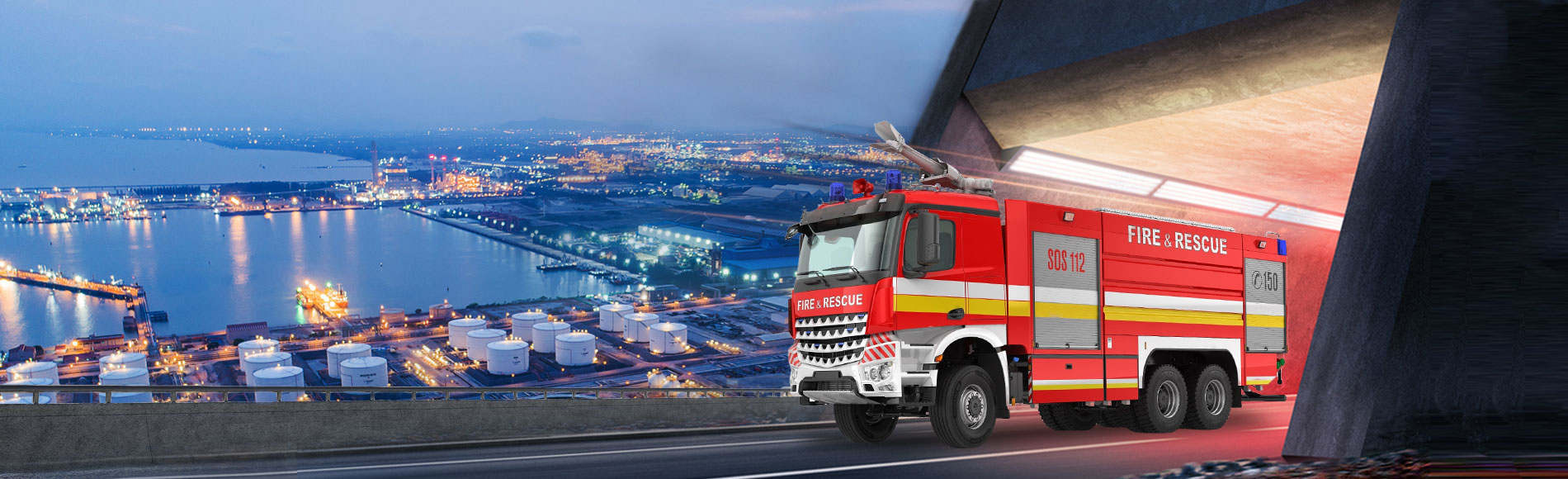
Come mantengono la pressione dell'acqua le autopompe antincendio?
La pressione dell'acqua è la forza motrice alla base di ogni operazione antincendio. Senza una pressione adeguata, l'acqua non può raggiungere l'incendio, penetrare nei materiali in fiamme o essere efficace.Autocarri antincendio devono non solo generare pressione, ma anche mantenerla costantemente durante l'intera operazione antincendio.
Questo articolo spiega come gli autocarri antincendio producono, controllano e mantengono la pressione dell'acqua, illustrando i componenti e i principi fondamentali coinvolti.
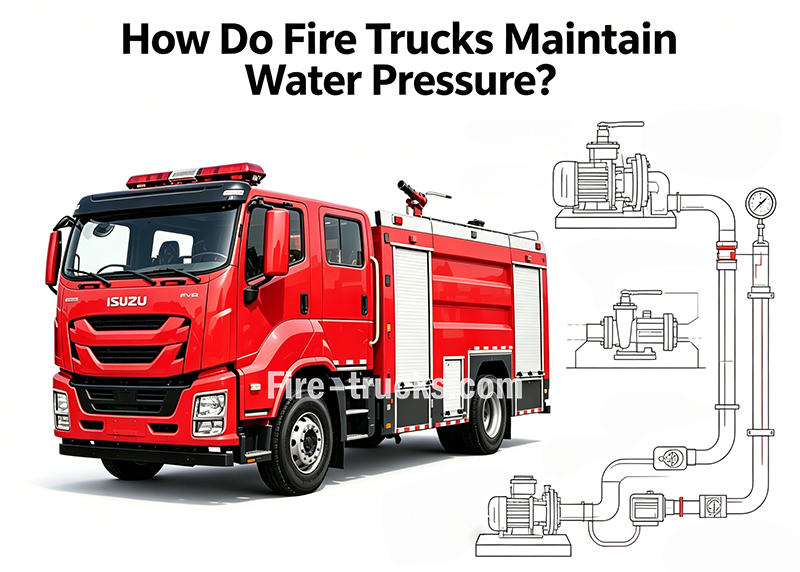
La pressione dell'acqua in un autocarro antincendio proviene dalla pompa antincendio. La pompa è azionata dal motore dell'autocarro tramite un sistema di presa di forza (PTO). Quando la PTO è inserita, la potenza del motore viene reindirizzata per far ruotare la girante della pompa ad alta velocità.
La girante è un disco rotante con palette curve. Mentre ruota, spinge l'acqua verso l'esterno tramite la forza centrifuga. Questa azione crea contemporaneamente due effetti:
Bassa pressione al centro (occhio della girante): l'acqua viene aspirata dal serbatoio o dal tubo di aspirazione
Alta pressione sul bordo esterno: l'acqua viene spinta nelle tubazioni di mandata
Ecco perché la maggior parte delle pompe degli autocarri antincendio sono chiamate pompe centrifughe.
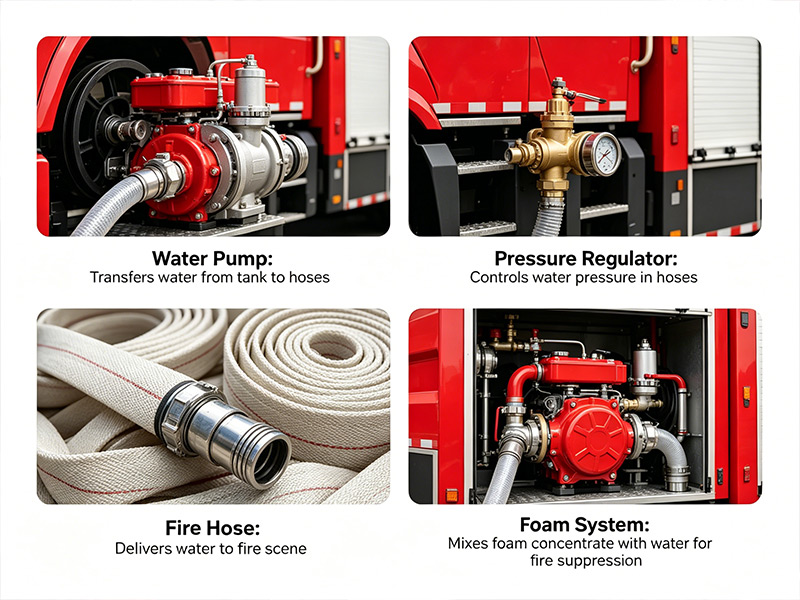
Le dimensioni e la potenza della pompa devono corrispondere all'uso previsto del veicolo. Gli autocarri antincendio grandi, come un autocarro combinato acqua/schiuma da 25.000 litri, richiedono pompe più potenti per mantenere un'elevata pressione erogando grandi volumi d'acqua. Queste pompe per impieghi gravosi sono progettate per efficienza e affidabilità, anche in condizioni estreme.
Per autocarri più piccoli, come un'autopompa leggera per schiuma da 3.000 litri, viene utilizzata una pompa meno potente ma comunque efficace. Questi autocarri non devono erogare altrettanta acqua e la pompa più piccola è sufficiente per mantenere la pressione necessaria alle loro operazioni.
Inoltre, l'altezza del serbatoio dell'acqua a bordo e la posizione della pompa influenzano la pressione. L'acqua scorre per gravità dal serbatoio alla pompa, ma la pompa deve comunque aumentare la pressione per spingere efficacemente l'acqua attraverso le manichette.
Una volta generata la pressione, deve essere controllata per adattarsi allo specifico compito antincendio. Situazioni diverse richiedono pressioni diverse.
Il modo più semplice per regolare la pressione è modificare la velocità del motore. Aumentando i giri del motore, la girante della pompa ruota più velocemente, aumentando la pressione. Diminuendo i giri, la pressione diminuisce. L'operatore della pompa controlla la velocità del motore dal pannello della pompa tramite un acceleratore elettronico.
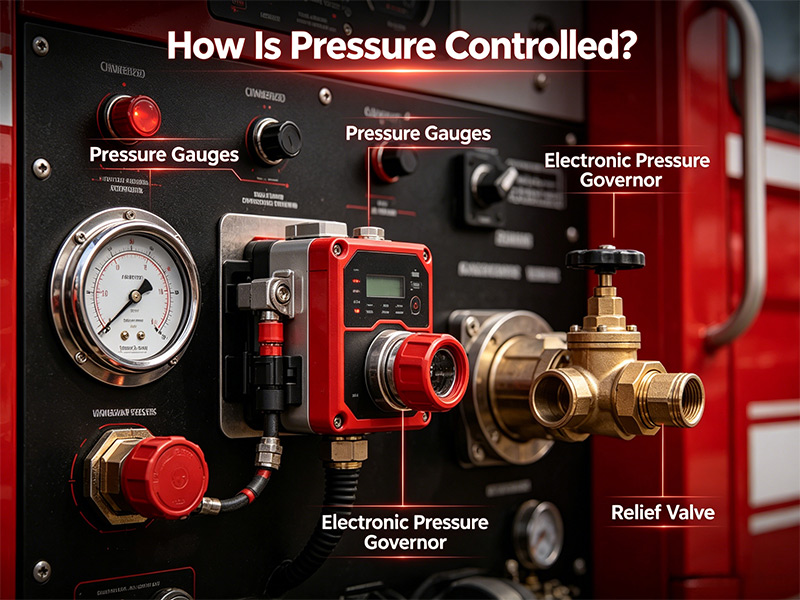
Gli autocarri antincendio moderni sono dotati di regolatori elettronici della pressione. Questi dispositivi mantengono automaticamente la pressione impostata indipendentemente dalle variazioni di portata.
Quando un vigile del fuoco apre o chiude una lancia, la richiesta di portata cambia. Senza un regolatore, la pressione diminuirebbe quando viene aperta una nuova linea di manichette o aumenterebbe bruscamente quando una linea viene chiusa. Il regolatore rileva questi cambiamenti e modifica automaticamente la velocità del motore per mantenere costante la pressione.
| Modalità | Funzione |
|---|---|
| Modalità pressione | Mantiene una pressione preimpostata indipendentemente dalle variazioni di portata |
| Modalità RPM | Mantiene una velocità del motore preimpostata (utilizzata per operazioni con schiuma o quando è necessaria una portata specifica) |
Come supporto ai regolatori elettronici, le valvole di sicurezza meccaniche forniscono un'ulteriore protezione. Se la pressione supera un limite impostato, la valvola di sicurezza si apre, deviando l'acqua in eccesso nuovamente verso il serbatoio o verso il lato di aspirazione della pompa. Questo previene lo scoppio delle manichette e i danni alla pompa.
L'acqua perde pressione mentre scorre attraverso le manichette a causa delle perdite per attrito. Più lunga è la manichetta, maggiore è la perdita. Gli autocarri antincendio compensano questo fenomeno in diversi modi.
L'operatore della pompa calcola la pressione necessaria alla lancia e aggiunge la pressione che verrà persa nella manichetta. Ad esempio, se la lancia richiede 100 psi e la manichetta perderà 50 psi lungo la sua lunghezza, l'operatore imposta la pompa per erogare 150 psi.
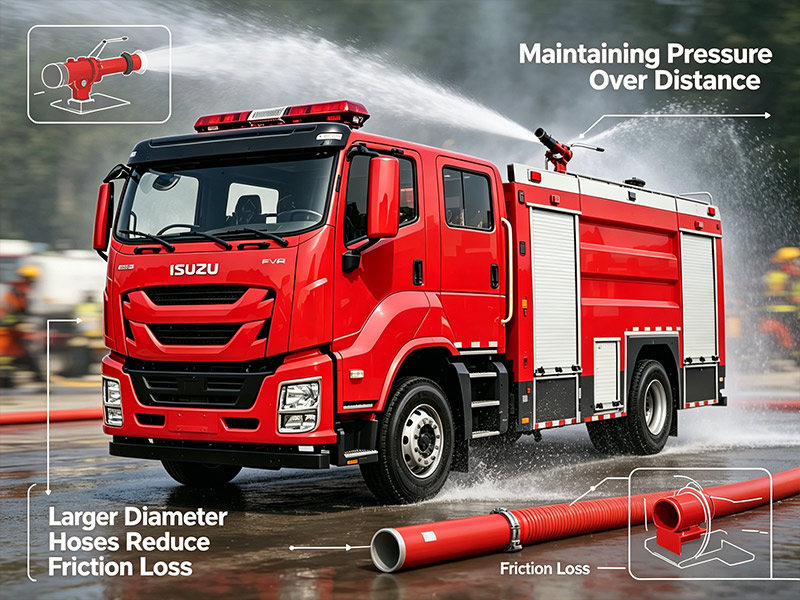
La perdita per attrito diminuisce significativamente all'aumentare del diametro della manichetta. Le manichette di diametro maggiore hanno una minore resistenza interna, consentendo all'acqua di scorrere più liberamente e di mantenere la pressione. Una manichetta da 2,5 pollici ha una perdita per attrito molto inferiore rispetto a una manichetta da 1,75 pollici con la stessa portata. Per le linee di alimentazione lunghe, gli autocarri antincendio utilizzano manichette di grande diametro (LDH) da 4 o 5 pollici per ridurre al minimo la perdita di pressione.
Per distanze estremamente lunghe, più autopompe possono lavorare in serie. La prima autopompa pompa acqua alla seconda autopompa, che aumenta la pressione e la invia più lontano. Questo viene chiamato pompaggio a relè.
Se la pompa non riesce ad aspirare abbastanza acqua, la pressione diminuirà indipendentemente dalla velocità del motore. Le cause comuni includono:
Filtro di aspirazione ostruito
Tubo di aspirazione collassato (tubo flessibile morbido usato per l'aspirazione da una fonte esterna)
Perdite d'aria nella linea di aspirazione
Prevenzione:Utilizzare un tubo di aspirazione rigido per l'aspirazione da una fonte esterna. Controllare e pulire regolarmente i filtri. Assicurarsi che tutti i collegamenti di aspirazione siano ben serrati.
La cavitazione si verifica quando la pompa non riceve abbastanza acqua. Invece dell'acqua, la girante ruota in una miscela di acqua e bolle di vapore. Quando queste bolle collassano, creano onde d'urto che danneggiano la girante e causano gravi fluttuazioni di pressione.
Segni di cavitazione:Rumore forte di sferragliamento proveniente dalla pompa, letture irregolari del manometro della pressione, flusso ridotto.
Prevenzione:Non far mai funzionare la pompa a una velocità superiore a quella che la fornitura d'acqua può garantire. Monitorare i manometri della pressione di aspirazione. Se il vuoto è troppo elevato, ridurre la velocità della pompa o verificare la presenza di restrizioni nell'aspirazione.
Ogni pompa ha una portata e una pressione massime nominali. Il funzionamento oltre questi limiti causerà una diminuzione della pressione. L'operatore della pompa deve conoscere la curva delle prestazioni della pompa e rimanere entro gli intervalli operativi sicuri.
I sistemi a schiuma aggiungono complessità al mantenimento della pressione.
Un'autopompa antincendio con sistema a schiuma ha due serbatoi separati: uno per l'acqua e uno per il concentrato di schiuma. La pompa deve aspirare da entrambi i serbatoi e miscelarli in un rapporto preciso prima dello scarico.
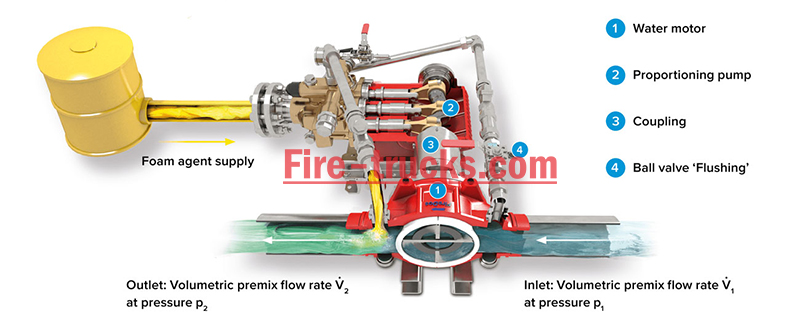
Il ruolo del proporzionatore di schiuma
Il proporzionatore di schiuma è il componente chiave che controlla il rapporto di miscelazione.
È installato nella tubazione. Quando l'acqua scorre attraverso di esso, crea un vuoto che aspira il concentrato di schiuma nel flusso d'acqua. I rapporti di miscelazione comuni sono 1%, 3% e 6%.
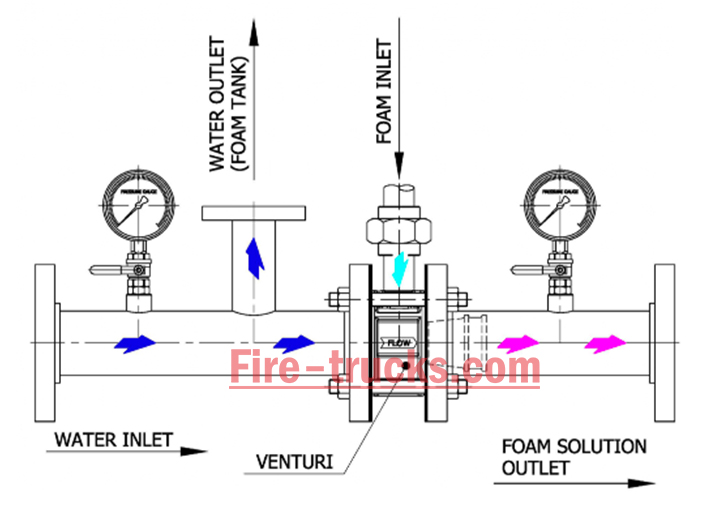
Il proporzionatore è altamente sensibile alla pressione dell'acqua in ingresso.
| Condizione | Risultato |
|---|---|
| Pressione troppo bassa | Vuoto debole → aspirazione insufficiente di schiuma |
| Pressione troppo alta | Rapporto errato → spreco di concentrato o scarsa qualità della schiuma |
Hardware aggiuntivo
Alcune autopompe con schiuma includono una linea di acqua di raffreddamento con una valvola di controllo. Questa raffredda la presa di forza (PTO) durante operazioni prolungate con schiuma, garantendo che il sistema di trasmissione funzioni in modo affidabile per periodi estesi.
Se la pressione diminuisce durante lo spegnimento di un incendio, seguire questi passaggi:
Aumentare la velocità del motore– Aumentare l'acceleratore per incrementare i giri della pompa (RPM)
Chiudere le uscite non necessarie– Maggiore pressione viene inviata alle manichette rimanenti
Controllare l'alimentazione idrica– Il filtro è ostruito? La fonte d'acqua è adeguata?
Passare alla modalità regolatore– Lasciare che il controllo automatico subentri
Se la pressione non può ancora essere ripristinata, il vigile del fuoco con l'ugello potrebbe dover avvicinarsi o utilizzare un ugello più piccolo per ridurre la richiesta di portata.
| Componente | Funzione |
|---|---|
| Manometri di pressione | Visualizzano la pressione di mandata della pompa e la pressione di aspirazione (vuoto) |
| Regolatore elettronico di pressione | Mantiene automaticamente la pressione impostata |
| Valvola di sicurezza | Previene la sovrapressurizzazione |
| Misuratore di portata | Misura la portata d'acqua (utilizzato per verificare la portata della pompa) |
| Manometro della pressione di aspirazione | Mostra il vuoto (aspirazione) o la pressione positiva (alimentazione da idrante) |
Il sistema di tubazioni trasporta l'acqua dal serbatoio o dalla fonte esterna alla pompa e poi alle uscite di mandata. Tutte le tubazioni sono realizzate in acciaio senza saldatura e collegate tramite flange ai vari componenti. Il tubo in acciaio senza saldatura offre elevata resistenza alla pressione, buona resistenza alla corrosione ed eccellenti proprietà di tenuta.
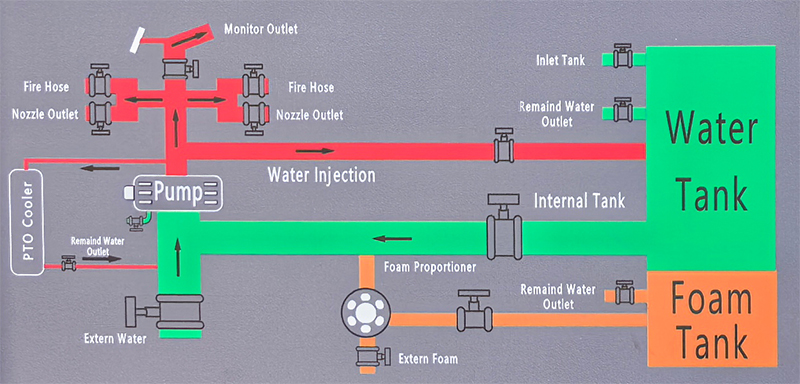
Esempio di configurazione tipica (basato su un modello di camion dei vigili del fuoco CS TRUCKS):
| Tipo di tubazione | Dimensione | Quantità | Valvola di controllo |
|---|---|---|---|
| Linea di scarico del serbatoio | DN150 | 1 linea | Valvola a farfalla manuale |
| Porta di aspirazione esterna | DN150 | 1 porta | Valvola a farfalla manuale |
| Uscite di mandata standard | DN80 e DN65 | 2 (una per lato) | Controllato dal pannello della pompa |
| Linea del monitor antincendio | DN80 | 1 linea | Valvola a sfera del monitor |
| Linee di riempimento esterne | DN65 | 2 linee | Controllato dal pannello della pompa |
| Linea di riempimento interna | DN65 | 1 linea | Controllato dal pannello della pompa |
| Linea di scarico | - | 1 linea | Valvola di scarico |
I raccordi flessibili vengono utilizzati nei collegamenti critici, come tra il serbatoio e la pompa, per assorbire le vibrazioni causate dal movimento del veicolo e dal funzionamento della pompa. Una valvola di scarico è installata nel punto più basso del sistema di tubazioni per scaricare l'acqua residua dopo le operazioni, prevenendo il congelamento e la corrosione. Inoltre, viene fornita una linea dell'acqua di raffreddamento con una valvola a sfera per raffreddare il PTO durante condizioni operative complesse.
Gli autocarri antincendio mantengono la pressione dell'acqua attraverso una combinazione di pompe centrifughe, regolatori elettronici, valvole di sovrapressione, manichette dimensionate correttamente e operatori di pompa esperti.
Il pompa centrifuga genera pressione facendo ruotare una girante. Gli autocarri più grandi richiedono pompe più potenti, mentre quelli più piccoli utilizzano pompe dimensionate adeguatamente alle loro esigenze.
Il regolatore di pressione mantiene automaticamente la pressione impostata
Le valvole di sovrapressione forniscono una protezione meccanica di riserva contro la sovrapressione
Manichette più grandi e pompaggio a relè riducono al minimo la perdita di pressione su lunghe distanze
Sistemi a schiuma richiedono una calibrazione precisa del dosatore per mantenere sia il rapporto di miscelazione sia la pressione
L'operatore della pompa monitora e regola la pressione durante tutta l'operazione
Senza una pressione costante, l'acqua non può raggiungere l'incendio né svolgere efficacemente il suo compito. Mantenere la pressione dell'acqua non è automatico: richiede attrezzature adeguate, una configurazione corretta, manutenzione regolare e attenzione costante da parte di personale addestrato.
Che si stia preparando un grande autocarro antincendio per un importante dipartimento dei vigili del fuoco cittadino o un mezzo più piccolo per aree rurali, ogni fattore relativo alla pressione dell'acqua deve essere considerato. È necessario un autocarro antincendio che fornisca una pressione affidabile e costante quando è più importante.


Potresti essere interessato alle seguenti informazioni
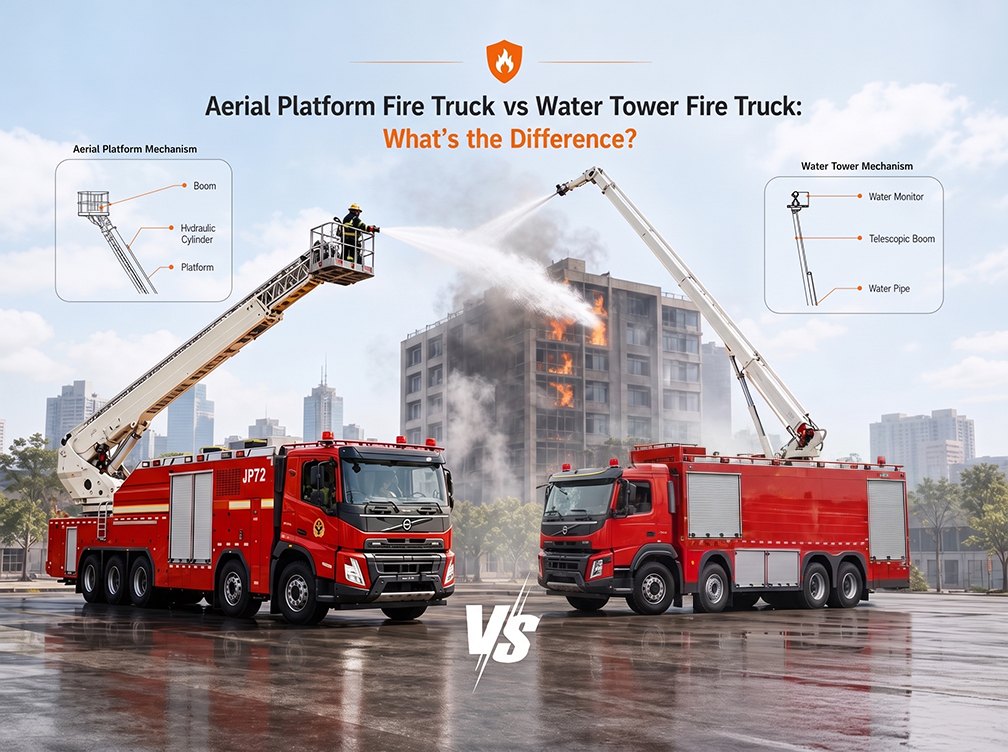
Quando si tratta di combattere gli incendi in edifici a molti piani, strutture industriali o grandi magazzini, gli autocarri antincendio aerei sono indispensabili. Ma tra i vari tipi di apparecchiature aeree, due spesso causano confusione: ilautocarro antincendio con piattaforma aerea e ilautocarro antincendio con torre d'acqua. Sebbene possano sembrare simili a prima vista—entrambi sono dotati di bracci idraulici e sono progettati per interventi antincendio in quota—svolgono missioni fondamentalmente diverse. Questo articolo analizza le differenze principali tra questi due tipi di veicoli, aiutando i professionisti dei servizi antincendio, i responsabili degli acquisti e i distributori di attrezzature a prendere decisioni informate in base alle esigenze operative. I. Cosa sono gli autocarri con piattaforma aerea? Secondo lo standard nazionale cinese GB 7956.12-2015, entrambi i veicoli rientrano nella categoria deiveicoli antincendio aerei—veicoli dotati di bracci elevabili, piattaforme girevoli e attrezzature antincendio per operazioni ad alta quota. Tuttavia, le loro definizioni specifiche evidenziano una distinzione fondamentale. Autocarro antincendio con piattaforma aerea Un autocarro antincendio con piattaforma aerea è dotato di un braccio combinato pieghevole o pieghevole-telescopico, una piattaforma per il personale, una piattaforma girevole e dispositivi antincendio. La caratteristica distintiva è lapiattaforma di lavoro (cestello) all'estremità del braccio, dove i vigili del fuoco possono stare per effettuare operazioni di soccorso e antincendio. Caratteristiche principali:• Dotato di una piattaforma che può trasportareda 750 libbre a oltre 1.500 libbre di personale e attrezzature• Progettato sia per ilsoccorso che per l'antincendio—i vigili del fuoco possono operare direttamente dalla piattaforma• La piattaforma può essere utilizzata con dispositivi di controllo della discesa, verricelli idraulici o scivoli di soccorso• Maggiore portata orizzontale e maggiore ampiezza operativa rispetto alle torri d'acqua II. Cosa sono gli autocarri antincendio con torre d'acqua? Un autocarro antincendio con torre d'acqua è dotato di un braccio combinato pieghevole o pieghevole-telescopico, una piattaforma girevole e dispositivi antincendio—senza piattaforma per il personale. Al suo posto, all'estremità del braccio è montato un monitor antincendio (cannone ad acqua), che può essere controllato a distanza da terra. Caratteristiche principali:•Nessuna piattaforma per il personale—i vigili del fuoco operano da terra tramite controllo remoto• Concentrato esclusivamente sulcontenimento degli incendi in quota, non sul soccorso• Eroga un flusso d'acqua eccezionalmente elevato—superando i 2.000 galloni al minutosu molti modelli industriali• Progettato per la protezione antincendio industriale dove non è richiesta la capacità di soccorso III. Confronto affiancato Caratteristica Autoscala antincendio con piattaforma aerea Automezzo antincendio con torre d...
Dettagli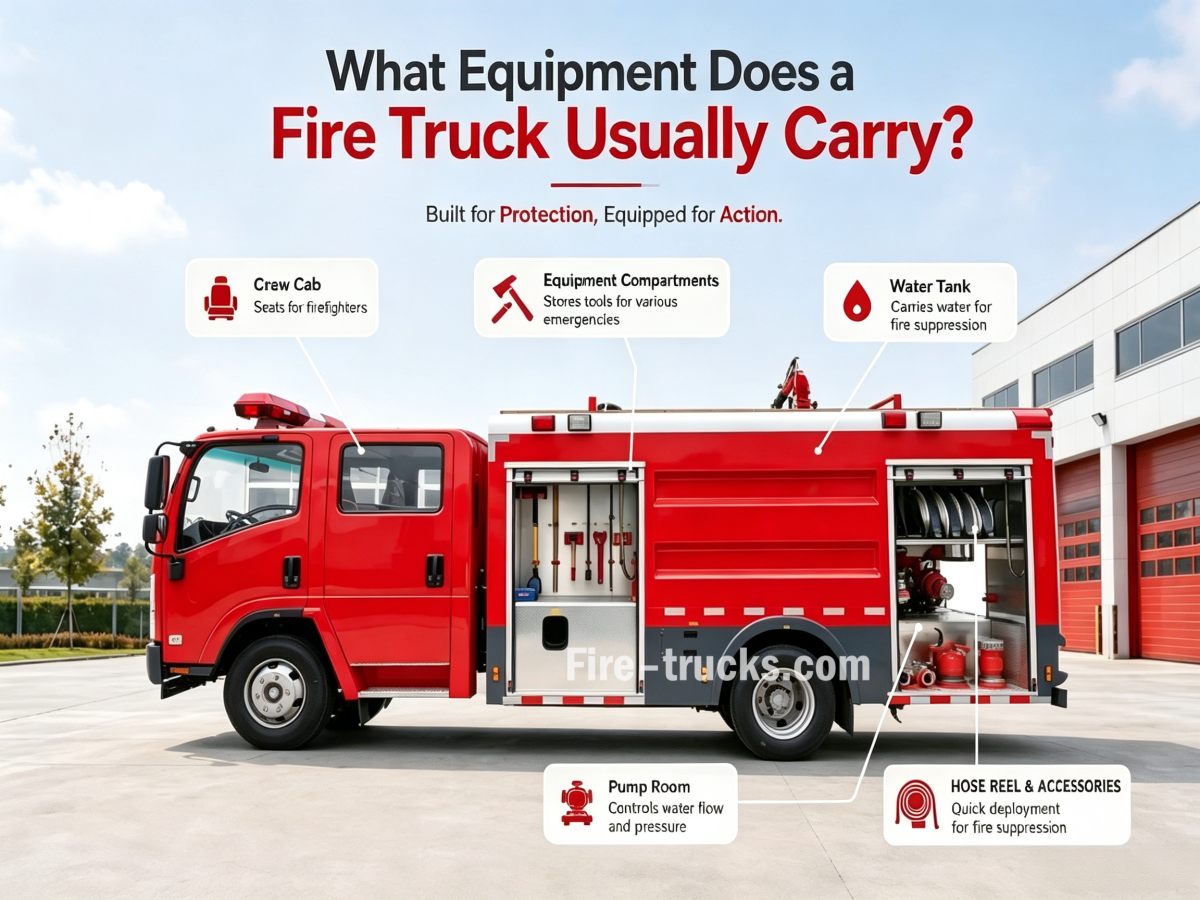
Un camion dei pompieri trasporta generalmente attrezzature per lo spegnimento degli incendi, l'approvvigionamento idrico, il soccorso e la protezione della sicurezza. Le attrezzature comuni includono pompe antincendio, serbatoi d'acqua, manichette antincendio, lance antincendio, monitor antincendio, valvole, scale antincendio, strumenti di soccorso, dispositivi di protezione e dispositivi di comunicazione. Questo articolo analizza sistematicamente la classificazione, le funzioni e le considerazioni sulla selezione delle attrezzature standardcamion dei pompieriattrezzature, aiutando i professionisti degli acquisti e gli utenti finali a comprendere completamente le configurazioni dei veicoli antincendio. I. Classificazione delle attrezzature dei camion dei pompieri 1. Attrezzature antincendio— Strumenti fondamentali per lo spegnimento diretto degli incendi, tra cui lance antincendio, monitor antincendio, manichette antincendio, divisori d'acqua e adattatori. 2. Attrezzature per soccorso e apertura di varchi— Strumenti per creare vie di accesso durante le operazioni di soccorso e spegnimento incendi, tra cui strumenti idraulici di soccorso, asce antincendio, leve, piedi di porco, seghe troncatrici e motoseghe. 3. Attrezzature di soccorso e salvataggio della vita— Attrezzature per la ricerca, il trasferimento e la protezione del personale, tra cui barelle, corde di soccorso, ganci di sicurezza, dispositivi di controllo della discesa, autorespiratori a circuito aperto (SCBA) e bombole d'aria di riserva. 4. Attrezzature per l'estrazione dei fumi e l'illuminazione— Attrezzature per migliorare le condizioni sul luogo dell'incendio, tra cui estrattori di fumo, torri d'illuminazione mobili e fari portatili di ricerca ad alta intensità. 5. Dispositivi di protezione individuale (DPI)— Equipaggiamento per proteggere la sicurezza dei vigili del fuoco, tra cui caschi, indumenti protettivi strutturali per antincendio, guanti, stivali e cinture di sicurezza. 6. Attrezzature di comunicazione e ricognizione— Attrezzature per la raccolta di informazioni sul luogo dell'incendio e il coordinamento del comando, tra cui radio ricetrasmittenti, termocamere e rilevatori di gas tossici. II. Attrezzature antincendio sui camion dei pompieri 1. Pompa antincendio La pompa antincendio è la fonte di energia per tutte le operazioni di spegnimento incendi. Pressurizza meccanicamente l'acqua, fornendole energia cinetica sufficiente per completare l'intero processo di "aspirazione → pressurizzazione → erogazione → scarico". Specifiche tipiche delle pompe antincendio: •Pompa antincendio a pressione standard (tipo CB10/30):Portata ≥30L/s, pressione nominale 1,0MPa, installazione posteriore. Adatta per autobotti d'acqua standard e camion antincendio a schiuma, soddisfa la maggior parte dei requisiti di approvvigionamento idrico antincendio urbani e industriali. •Pompa antincendio a media/alta pressione:Portata a bassa pressione 30L/s a 1,0MPa, portata ad alta pressione 20L/s a 2,0MPa, ...
Dettagli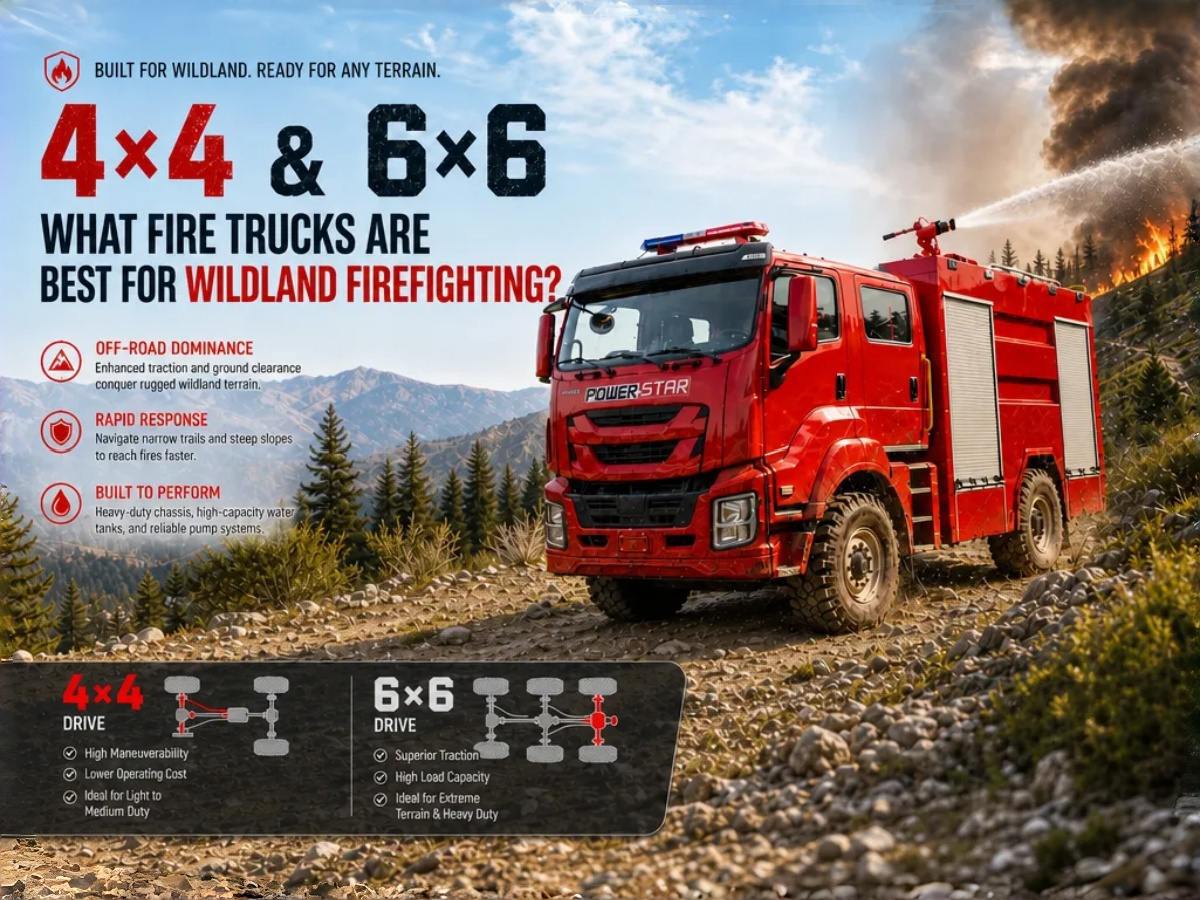
La lotta agli incendi boschivi presenta sfide fondamentalmente diverse rispetto alla lotta agli incendi strutturali. Nelle foreste remote, nelle praterie e nei terreni montuosi, i camion dei vigili del fuoco devono percorrere sentieri stretti, affrontare pendii ripidi e operare lontano da idranti o fonti d'acqua. Scegliere il giusto camion antincendio è una decisione strategica che influisce direttamente sui tempi di risposta, sulla sicurezza dell'equipaggio e sull'efficacia dello spegnimento degli incendi. Questo articolo fornisce un'analisi completa dei tipi di camion dei vigili del fuoco più adatti alla lotta agli incendi boschivi, delle loro caratteristiche principali e dei metodi di selezione, aiutandoti a prendere la decisione giusta in base ai tuoi specifici requisiti operativi. Risposta rapida Gli incendi boschivi sono caratterizzati da vaste aree incendiate, terreni complessi, fonti d'acqua limitate e condizioni stradali difficili, quindi non esiste un unico camion dei vigili del fuoco in grado di gestire tutti gli scenari di incendio forestale. In generale, la lotta agli incendi boschivi utilizza principalmente i seguenti tipi di camion dei vigili del fuoco: • Camion antincendio boschivo leggero: per l'accesso alle strade forestali e la risposta rapida• Camion antincendio boschivo fuoristrada 4×4: per terreni montuosi e collinari• Camion antincendio boschivo 6×6: per incendi forestali su larga scala e operazioni prolungate• Autobotti: per la fornitura continua d'acqua e il supporto• Camion antincendio a schiuma: per impianti petroliferi, attrezzature forestali o incendi speciali• Veicoli di soccorso: per comunicazioni, illuminazione, apertura di varchi e supporto logistico I. Perché gli incendi boschivi richiedono camion dei vigili del fuoco specializzati? Gli incendi boschivi differiscono fondamentalmente dagli incendi strutturali in diversi aspetti critici: Caratteristiche principali degli incendi boschivi:• Grandi aree incendiate che coprono ettari di terreno• Direzioni del vento che cambiano rapidamente• Terreni complessi e impervi• Accesso limitato o assente a idranti o fonti d'acqua• Strade forestali strette e non asfaltate• Difficili condizioni di comunicazione I camion dei vigili del fuoco urbani standard sono generalmente inadatti alla lotta agli incendi boschivi per i seguenti motivi: • Mancano della trazione 4×4 o integrale per strade di montagna non asfaltate e pendii ripidi;• Le dimensioni maggiori e la ridotta altezza da terra li rendono soggetti a rimanere bloccati su stretti sentieri forestali e terreni morbidi;• Le pompe urbane privilegiano un'elevata portata a pressione moderata, mentre le operazioni in ambiente boschivo richiedono alta pressione su lunghe stese di tubazioni con acqua limitata: un approccio fondamentalmente diverso. II. Tipi comuni di camion antincendio boschivi Tipo di camion dei vigili del fuoco Caratteristiche principali Scenari applicabili Camion antincendio boschivo leggero Elevata mobilità, dim...
Dettagli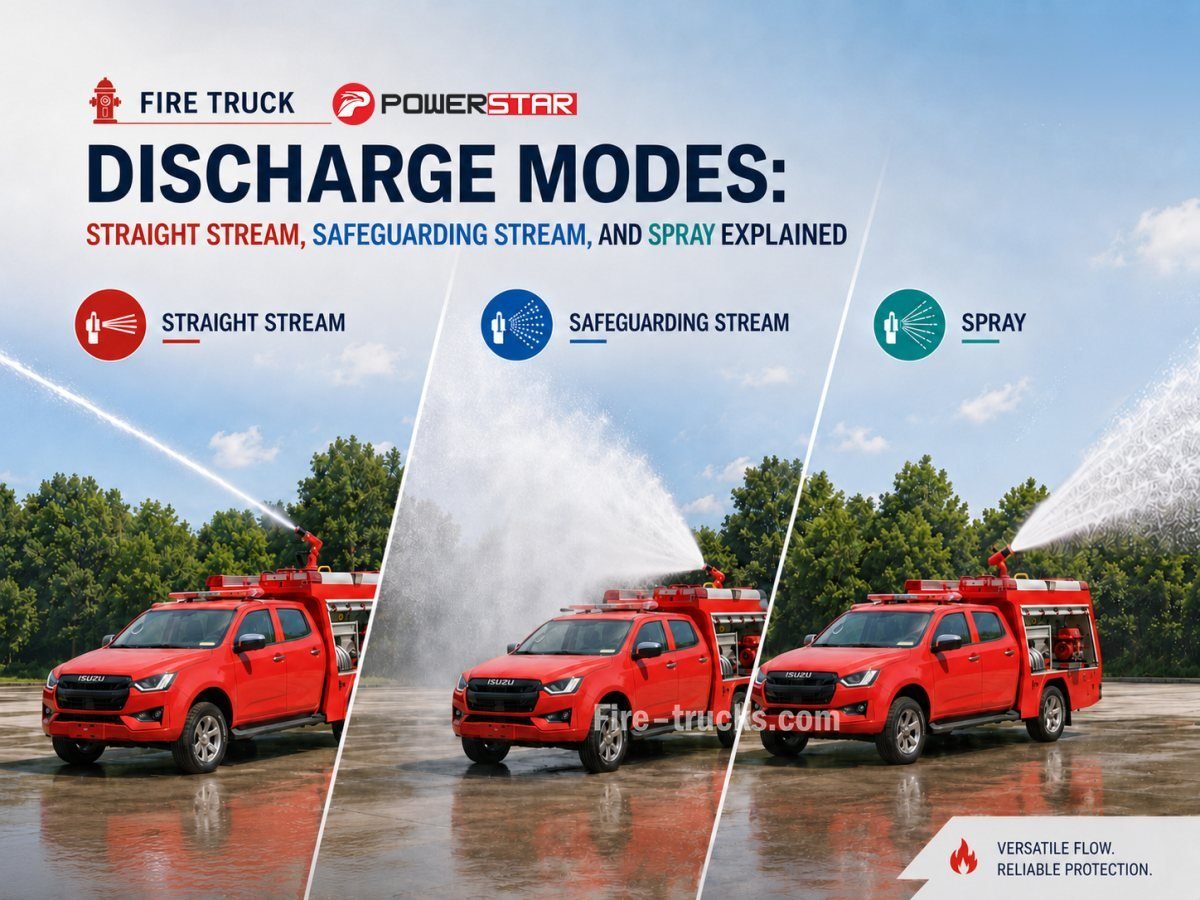
Nelle operazioni antincendio, la selezione della modalità di scarico determina direttamente l'efficienza di estinzione, la sicurezza operativa e l'efficacia del controllo dell'incendio. La maggior parte delle persone non sa che autopompa antincendio gli ugelli possono passare tra tre modalità di scarico principali: getto pieno, getto nebulizzato e getto di protezione. Le diverse modalità variano notevolmente per schema di flusso, portata, forza d'impatto e area di copertura, e ciascuna corrisponde a scenari antincendio applicabili completamente diversi. Questo articolo, basato sugli standard professionali delle operazioni antincendio, analizza in modo completo i principi, le caratteristiche principali e gli scenari applicabili delle tre modalità di scarico, aiutando i nostri clienti a padroneggiare sistematicamente le tecniche di scarico delle autopompe antincendio. I. Perché le autopompe antincendio necessitano di diverse modalità di scarico? Il getto pieno, il getto nebulizzato e il getto di protezione corrispondono a tre diversi meccanismi di estinzione: estinzione tramite impatto, soffocamento tramite vaporizzazione e protezione dalle radiazioni termiche. I vigili del fuoco devono effettuare il cambio in modo flessibile in base alle condizioni del luogo. Quindi, perché non possiamo continuare a usare un solo tipo di getto? 1. La diversità dei tipi di incendio richiede diverse forme di agenti estinguenti Diversi tipi di incendio presentano caratteristiche di combustione differenti, che determinano il metodo di estinzione appropriato: • Gli incendi di materiali solidi di classe A richiedono l'impatto del getto pieno per rompere i materiali in combustione e penetrare per il raffreddamento interno; • Gli incendi di liquidi di classe B non possono utilizzare l'impatto del getto pieno (che provoca schizzi e diffonde l'incendio), ma devono usare il getto di protezione o il getto nebulizzato per copertura e diluizione; • Gli incendi elettrici sotto tensione di classe E possono utilizzare solo il getto nebulizzato, poiché le gocce d'acqua fini non formano un percorso conduttivo continuo; • Gli incendi in spazi chiusi richiedono il getto nebulizzato per riempire l'intero ambiente, ottenendo l'estinzione tramite assorbimento del calore di vaporizzazione e soffocamento. Nessuna singola modalità può adattarsi a tutti i tipi di incendio. 2. Le diverse fasi dello stesso incendio richiedono approcci tattici differenti Anche per lo stesso incendio, fasi diverse richiedono modalità di scarico differenti: • Nella fase iniziale, quando l'incendio è intenso, è necessario il getto pieno per colpire a lunga distanza il punto dell'incendio e ottenere una rapida soppressione; • Durante l'avanzamento, è necessario il getto di protezione per formare una barriera a cortina d'acqua che blocchi la radiazione termica e protegga il personale; • Prima di entrare in una stanza, è necessario il getto nebulizzato per raffreddare e diluire fumo e gas, creando le condizioni per l...
Dettagli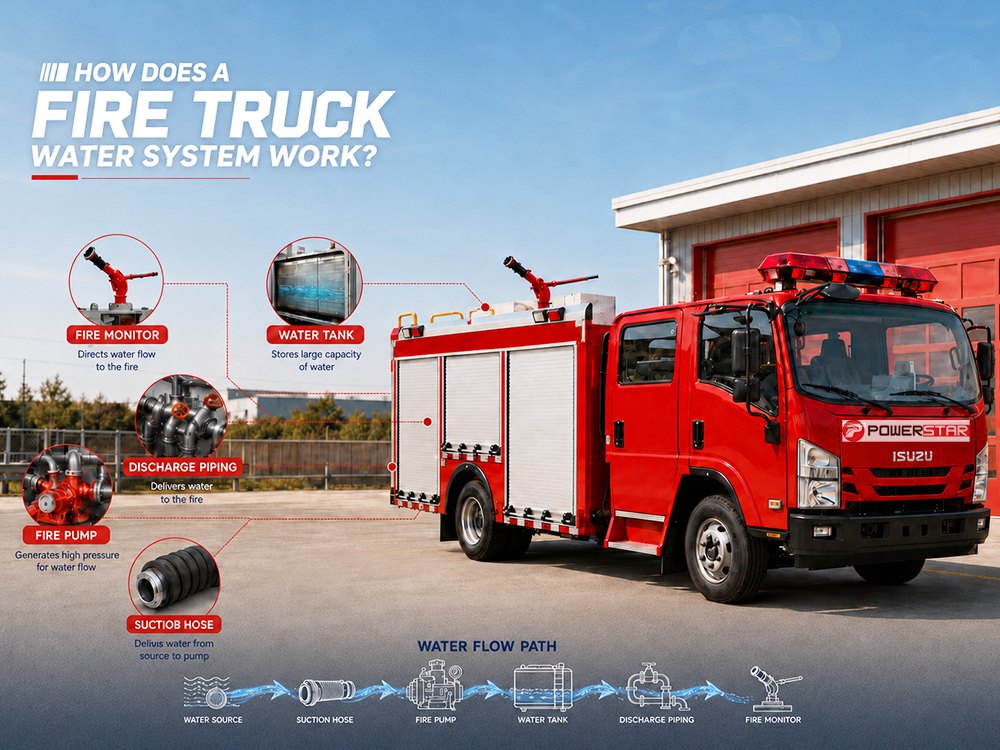
Il sistema idraulico dell'autopompa antincendio è il cuore di ogni operazione di spegnimento incendi. Dirige con precisione l'acqua dal serbatoio o da una fonte esterna attraverso la pompa, le valvole e le tubazioni per fornire acqua ad alta pressione o schiuma sul luogo dell'incendio, sia che si tratti di un incendio in un edificio a molti piani in un denso centro urbano sia di un incendio di un serbatoio di stoccaggio petrolchimico in una zona industriale. autopompa antincendio Il sistema idraulico dell'autopompa antincendio è composto da molteplici componenti che lavorano insieme: pompa antincendio, serbatoio dell'acqua, tubo di aspirazione, tubazioni di mandata, valvole, raccordo di diramazione, raccordo collettore, filtro, monitor antincendio, raccordi per manichette e altro ancora. Il percorso completo del flusso è: Serbatoio dell'acqua → Tubo di aspirazione → Filtro → Pompa antincendio → Sistema di regolazione della pressione → Collettore di mandata → Valvole → Raccordo di diramazione → Monitor antincendio / Raccordi per manichette → Ugello Questo articolo spiega ogni componente del sistema idraulico e come lavorano insieme per fornire acqua alla pressione e al flusso corretti. I. Componenti principali del sistema idraulico Serbatoio dell'acqua Conserva la riserva d'acqua a bordo. ● Capacità: Tipicamente 2.000–12.000 litri. ● Erogazione: Alimenta la pompa attraverso le tubazioni di aspirazione. ● Caratteristiche: Paratie anti-sciabordio per la stabilità del veicolo, filtro per filtrare i detriti e sistema di adescamento per l'aspirazione da fonti d'acqua naturali. Pompa antincendio Una pompa centrifuga azionata dal motore del camion tramite PTO; a uno o più stadi, in ghisa o bronzo. ● Classi di pressione: Disponibile con valori nominali standard di 0,8 MPa, 1,0 MPa, 1,2 MPa e 1,4 MPa, conformi ai requisiti tipici della lotta antincendio. ● Portate: Vanno da 1.200 a 6.000 L/min, con curve di prestazione ottimizzate sia per operazioni ad alta pressione sia per operazioni ad alto volume. Valvole e tubazioni Una rete di tubi e valvole che controlla la direzione e il volume del flusso d'acqua. ● Valvola di aspirazione: Collega la pompa a fonti d'acqua esterne (idrante o punto di aspirazione) ● Valvola serbatoio-pompa: Consente alla pompa di prelevare acqua direttamente dal serbatoio a bordo ● Valvole di mandata: Controllano il flusso d'acqua verso manichette e ugelli II. Come funziona il sistema idraulico dell'autopompa antincendio Fase 1: Presa d'acqua e adescamento L'acqua entra nel sistema dal serbatoio a bordo, dall'idrante antincendio o da fonti d'acqua naturali (laghi, fiumi, stagni). Quando si aspira da fonti naturali, il sistema di adescamento (pompa a vuoto) rimuove l'aria dal tubo di aspirazione, creando un vuoto che consente alla pressione atmosferica di spingere l'acqua nella pompa. Un filtro trattiene i detriti per proteggere la pompa e una valvola di ritegno impedisce il riflusso. Passaggio 2: Pressurizzazione della pompa La pomp...
Dettagli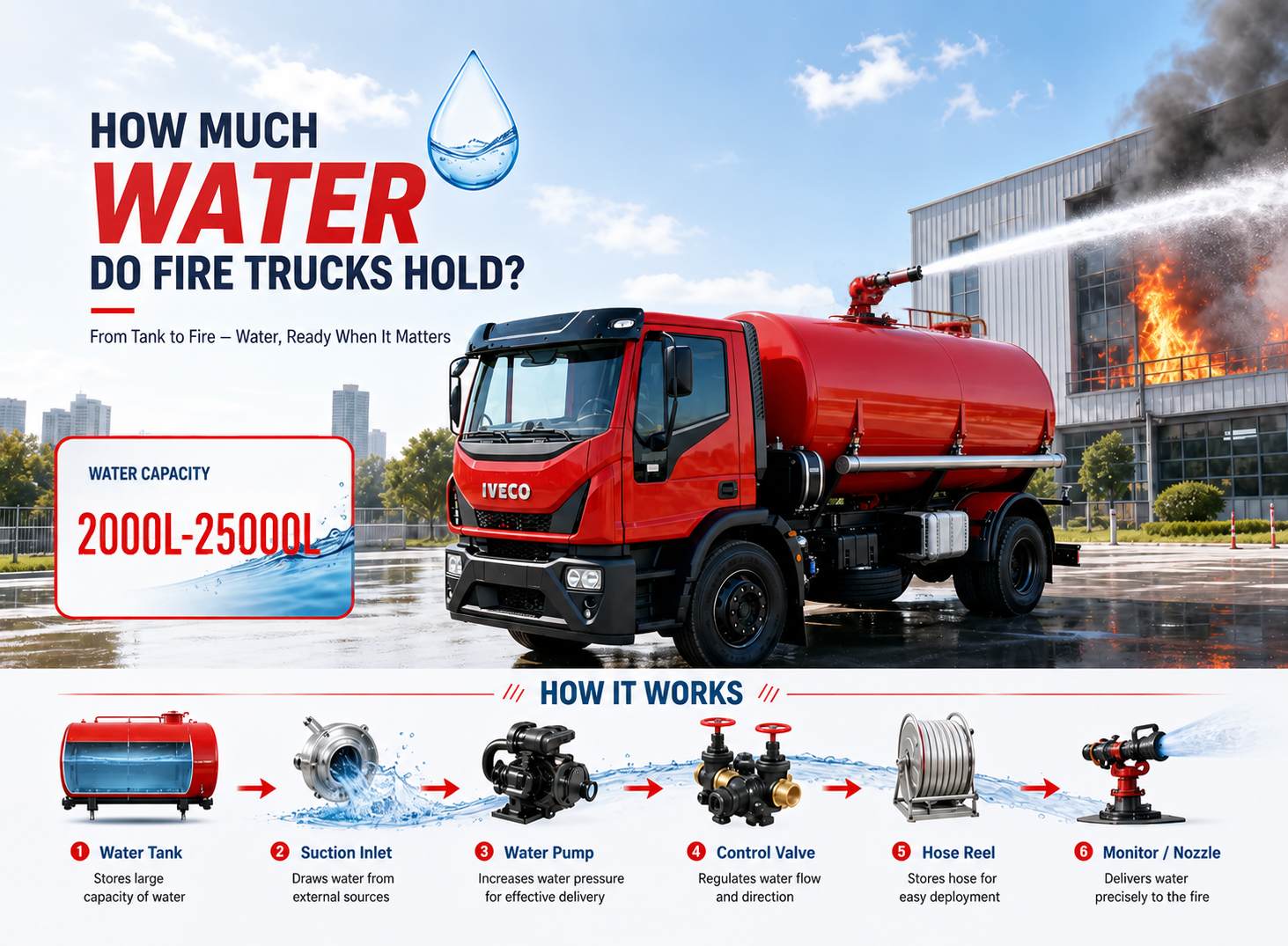
Quanta acqua può trasportare un'autopompa antincendio? Questa è una delle prime domande che i nostri clienti si pongono quando selezionano un'autopompa antincendio. Non esiste un numero fisso unico: dipende dal tipo di veicolo, dalla capacità del telaio, dallo scopo progettuale e dalle normative regionali, con valori che vanno dalle unità leggere da 2.000 litri fino alle autopompe antincendio industriali da 25.000 litri. Tuttavia, un serbatoio più grande non significa sempre prestazioni migliori; veicolo antincendio la capacità del serbatoio dell'acqua deve essere adeguatamente abbinata alla portata della pompa, alla portata di scarico del monitor e alla capacità del telaio per ottenere risultati efficaci nello spegnimento degli incendi. Questo articolo parte dai fondamenti della capacità del serbatoio dell'acqua delle autopompe antincendio, analizza gli intervalli di stoccaggio tipici per diversi tipi di veicoli, esamina i fattori chiave che influenzano la progettazione del serbatoio e fornisce indicazioni pratiche per l'acquisto. Punti chiave: La capacità del serbatoio dell'acqua delle autopompe antincendio varia tipicamente da 2.000 a 25.000 litri Diversi tipi di autopompe antincendio hanno capacità del serbatoio differenti Un serbatoio più grande non significa una migliore capacità di spegnimento degli incendi La capacità del serbatoio deve essere abbinata alla portata della pompa, alla portata del monitor e alla capacità del telaio Lo spegnimento degli incendi industriali richiede generalmente serbatoi grandi, mentre lo spegnimento degli incendi municipali dà priorità alla manovrabilità » I. Tre tipi fondamentali di serbatoi d'acqua per autopompe antincendio Autopompe:Questi sono i veicoli antincendio municipali più comuni. Si affidano principalmente agli idranti per l'approvvigionamento idrico e trasportano circa 1.900–3.800 litri d'acqua a bordo per l'attacco iniziale. Il componente principale di questi veicoli è la pompa, non il serbatoio: sono progettati per erogare acqua pressurizzata una volta collegati a un idrante. Autobotti (trasportatori d'acqua):Questi veicoli sono dedicati al trasporto di grandi volumi d'acqua, con capacità del serbatoio generalmente superiori a 11.400 litri. Svolgono un ruolo fondamentale nelle aree rurali e remote dove gli idranti non sono disponibili, trasportando acqua dalle fonti idriche al luogo dell'incendio affinché le autopompe possano utilizzarla. Autopompe-autobotti:Questi veicoli combinano le funzioni di pompaggio e trasporto dell'acqua in un'unica unità. Possono sia erogare acqua per lo spegnimento degli incendi sia rifornire altri veicoli. Le capacità dei serbatoi variano generalmente da 5.700 a 11.400 litri, rendendoli una soluzione versatile per i vigili del fuoco. » II. Quanta acqua possono trasportare diversi tipi di autopompe antincendio? Tipo di autopompa antincendio Capacità tipica del serbatoio Applicazione principale Autopompa antincendio leggera 2.000–3.000 L Risposta rapida urbana, attacc...
Dettagli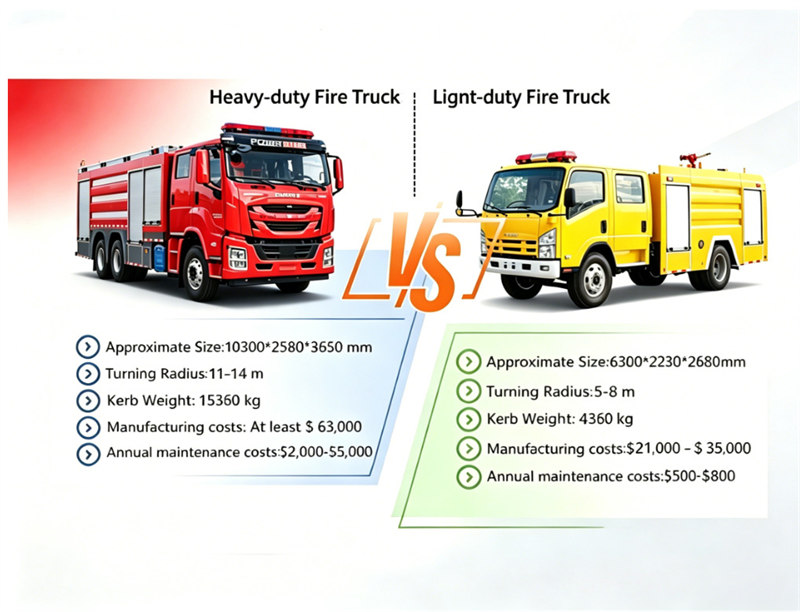
Autocarro antincendio di soccorsole esigenze variano drasticamente tra le aree metropolitane e le comunità rurali o delle piccole città. I grandi dipartimenti antincendio urbani si affidano ad autocarri antincendio pesanti con enormi serbatoi d'acqua, scale per edifici alti e configurazioni industriali complete per gestire incendi in grattacieli, incendi industriali ed emergenze su larga scala. Tuttavia, per piccole città, paesi rurali, stazioni antincendio dei villaggi e dipartimenti antincendio volontari, gli autocarri antincendio pesanti spesso diventano più un peso che un vantaggio. Ecco perché gli autocarri antincendio leggeri sono diventati la soluzione più diffusa e pratica per i dipartimenti antincendio di piccole città e aree rurali in tutto il mondo. Bilanciando dimensioni compatte, mobilità flessibile, funzioni complete di soccorso di base e bassi costi complessivi, soddisfano perfettamente le esigenze quotidiane di soccorso e prevenzione incendi delle squadre antincendio locali. L'autocarro antincendio leggero è un veicolo antincendio di emergenza compatto e leggero progettato specificamente per scenari antincendio locali, suburbani e rurali. I. Confronto tra autocarri antincendio pesanti e autocarri antincendio leggeri: Per mostrare chiaramentevisualizzareil divario tra autocarri antincendio pesanti e leggeri, abbiamo preparato una tabella comparativa diretta che copre i principali parametri pratici. I modelli pesanti superano i 10 metri di lunghezza con un raggio di sterzata di 11–14 m e un peso a vuoto di 15 tonnellate, con un costo di costruzione di almeno 63.000 $ più 2.000–5.000 $ di manutenzione annuale. Al contrario, gli autocarri antincendio leggeri compatti riducono le dimensioni quasi della metà, pesano solo 4.360 kg, partono da 21.000 $ e mantengono la manutenzione annuale sotto gli 800 $, offrendo una mobilità e un valore economico molto migliori per stazioni rurali e di piccole città. Ⅱ.Punti chiave degli autocarri antincendio leggeri: 1.Design leggero ma con elevata capacità di carico. Il peso totale a pieno carico rimane inferiore a 8.000 kg anche quando il veicolo è completamente carico, consentendo un intervento di emergenza estremamente rapido. 2.È disponibile la personalizzazione con trazione integrale per affrontare superfici stradali difficili e irregolari comuni nelle regioni remote. 3.La funzionalità completa per la lotta antincendio viene mantenuta integralmente: a. Doppi serbatoi indipendenti per acqua e schiuma antincendio. b. Cabina equipaggio a doppia fila per ospitare una squadra completa di vigili del fuoco in intervento. c. Inventario standard completo di strumenti di soccorso antincendio di emergenza. d. Accessori opzionali inclusi sistemi di illuminazione dell'area d'intervento e attrezzature di traino. 4.Il sistema di presa di forza (PTO) funge da azionamento operativo principale. Dispone di comandi intuitivi e di una manutenzione semplice con sostituzione agevole dei componen...
Dettagli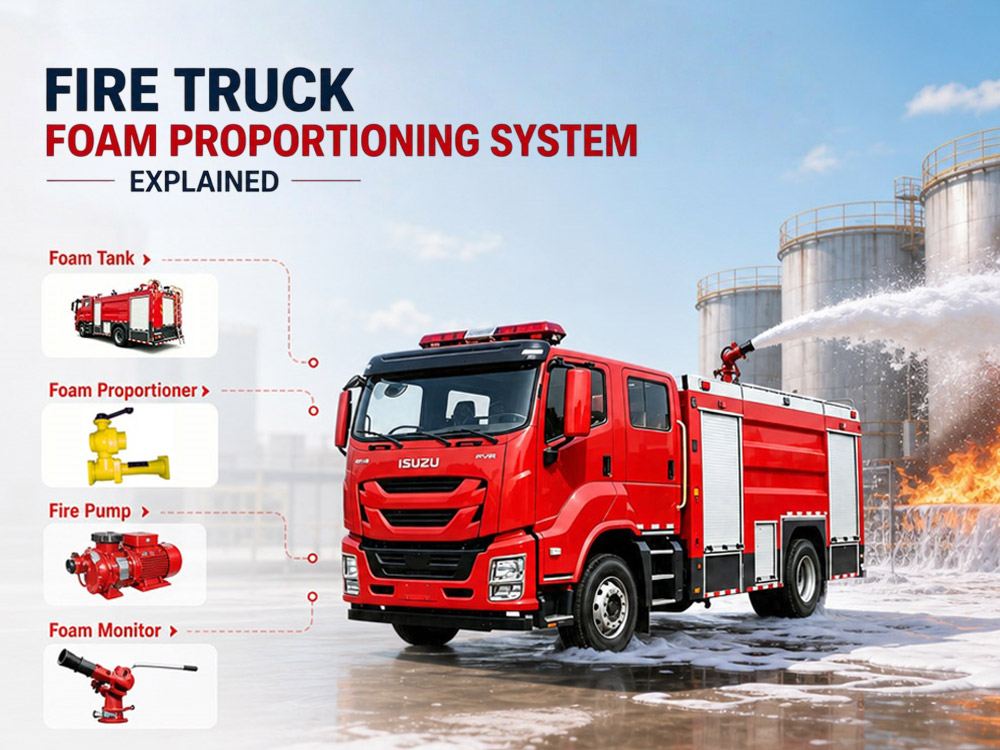
Il sistema schiumogeno dell'autopompa antincendio miscela l'acqua con il concentrato schiumogeno in rapporti precisi (1%, 3% o 6%) per creare una soluzione schiumogena. Questa soluzione viene poi pressurizzata dalla pompa antincendio ed espansa con aria attraverso gli ugelli schiumogeni — questo è il principio di funzionamento fondamentale di come una autopompa antincendio con schiuma miscela schiuma e acqua — producendo infine una copertura di schiuma stabile che ricopre la superficie del combustibile. Questo processo aumenta l'efficienza antincendio di oltre il 50% riducendo al contempo lo spreco di concentrato schiumogeno del 30%. » I. Perché un'autopompa antincendio necessita di un sistema schiumogeno? Rispetto all'utilizzo della sola acqua, la schiuma offre tre vantaggi principali: 1. Isolamento dell'ossigeno— La schiuma ricopre la superficie in fiamme, formando una barriera fisica densa che impedisce all'ossigeno di raggiungere la zona di combustione, soffocando così l'incendio. 2. Riduzione della temperatura— Il contenuto d'acqua nella soluzione schiumogena assorbe grandi quantità di calore durante l'evaporazione, riducendo rapidamente la temperatura dell'area in fiamme. 3. Prevenzione della riaccensione— Lo strato di schiuma continua a coprire l'area dell'incendio anche dopo lo spegnimento, isolando efficacemente l'ossigeno e i vapori infiammabili e riducendo significativamente il rischio di riaccensione. » II. Principi di funzionamento fondamentali del sistema schiumogeno 1. Sistema di proporzionamento:L'acqua scorre attraverso il proporzionatore → crea pressione negativa (sistema a pressione negativa) o utilizza una pompa per schiuma (sistema a pressione positiva) → aspira il concentrato schiumogeno dal serbatoio della schiuma → miscela al rapporto preimpostato (1%, 3% o 6%) → la soluzione schiumogena fluisce verso la pompa. 2. Pressurizzazione tramite pompa:La soluzione schiumogena entra nella pompa centrifuga → viene pressurizzata a 0,8–1,2 MPa → viene inviata attraverso le tubazioni alle uscite di scarico o al monitor per schiuma. 3. Espansione della schiuma:La soluzione schiumogena pressurizzata passa attraverso un ugello schiumogeno o un dispositivo di aerazione → l'aria viene trascinata all'interno → la soluzione si espande trasformandosi in schiuma pronta all'uso → ricopre la superficie del combustibile → interrompe l'apporto di ossigeno e soffoca l'incendio. Concetto chiave:Il concentrato schiumogeno + acqua non equivale alla schiuma finita. La soluzione schiumogena miscelata è ancora un liquido — deve essere combinata con l'aria attraverso un ugello schiumogeno per diventare vera schiuma antincendio. Quando la soluzione schiumogena ad alta pressione passa attraverso l'ugello ad alta velocità, crea una zona di pressione negativa localizzata che aspira forzatamente l'aria. L'aria e il liquido collidono e vengono sottoposti a forte taglio all'interno dell'ugello, trasformandosi istantaneamente in milioni di piccole bolle che si ac...
Dettagli
Per favore, continua a leggere, resta aggiornato, iscriviti e saremo lieti di conoscere la tua opinione.

 Rete IPv6 supportata

 italiano
 English
 français
 Deutsch
 русский
 español
 português
 Nederlands
 العربية
 日本語
日本語 한국의
한국의 Türkçe
 Melayu
 ไทย
ไทย Tiếng Việt
 Indonesia
  中文
中文 қазақ
қазақ Filipino
 မြန်မာ
 српски