Lascia un messaggio
Se sei interessato ai nostri prodotti e desideri maggiori dettagli, lascia un messaggio qui, ti risponderemo il prima possibile.

Come funziona una pompa antincendio? Spiegazione del principio di funzionamento della pompa di un camion dei pompieri
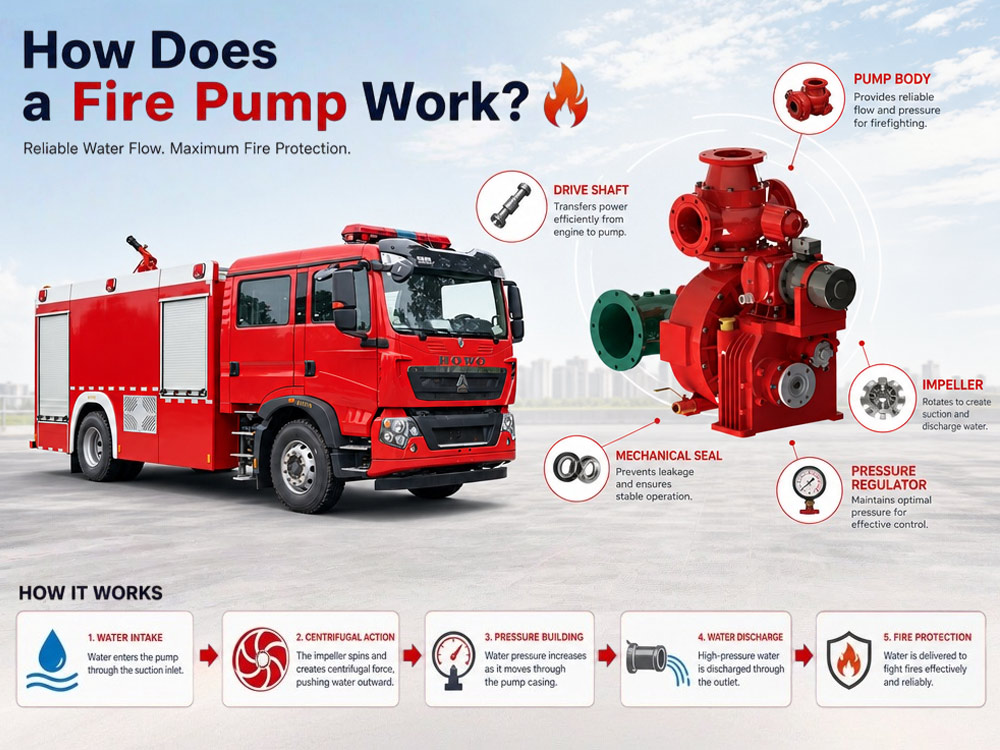
Una pompa antincendio è il cuore del sistema di erogazione dell'acqua di ogni camion dei vigili del fuoco. Che si intervenga per un incendio strutturale, un'emergenza industriale, un incidente aeroportuale o un'operazione in ambiente boschivo, la pompa antincendiosu un camion dei vigili del fuoco è responsabile dell'erogazione di acqua ad alta pressione a manichette, monitor antincendio e sistemi a schiuma.Il suo design con girante centrifuga e il sistema azionato tramite presa di forza garantiscono una pressione stabile e portate elevate, aumentando direttamente l'efficacia delle operazioni antincendio di oltre il 40%, mentre riducono il tempo di risposta di 3 volte. Può essere definita il guardiano invisibile delle operazioni antincendio e la pietra angolare tecnica del moderno intervento di emergenza.
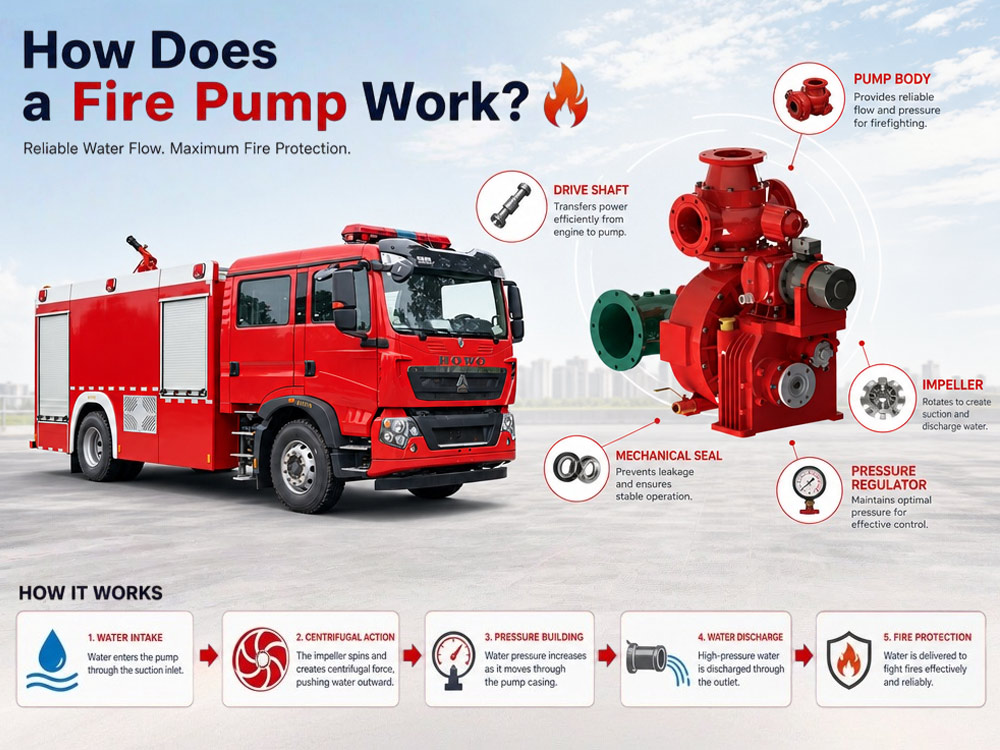
Scopri come funziona una pompa antincendio, compresi il suo principio di funzionamento, i componenti principali, il processo di flusso dell'acqua, la generazione della pressione e le applicazioni. Scopri come le pompe dei camion dei vigili del fuoco forniscono un approvvigionamento idrico affidabile per lo spegnimento degli incendi e come scegliere la pompa giusta per il tuo veicolo antincendio.Impariamo a conoscerla oggi.
1. Girante:Il componente rotante che aspira l'acqua e la spinge verso l'esterno mediante la forza centrifuga. Generalmente realizzata in bronzo, acciaio inossidabile o ghisa.
2. Corpo della pompa:L'alloggiamento che contiene la girante e dirige il flusso dell'acqua. Progettato per convertire la velocità in pressione.
3. Presa di forza (PTO):Il collegamento meccanico che trasferisce la potenza del motore dalla trasmissione del camion alla pompa antincendio.
1. La potenza viene trasferita dal motore attraverso la presa di forza
Il motore del camion aziona la presa di forza, che si collega all'albero della pompa. Quando l'operatore innesta la presa di forza, la potenza del motore viene reindirizzata per far ruotare la girante della pompa ad alta velocità.
2. La girante inizia a ruotare
La girante ruota a 1.500–2.500 giri/min, aspirando acqua nella pompa attraverso l'ingresso di aspirazione. Le pale rotanti della girante creano una zona a bassa pressione al centro, aspirando acqua dal serbatoio a bordo, dall'idrante o dalla fonte d'acqua naturale.
3. La forza centrifuga aumenta la pressione dell'acqua
Quando la girante ruota, spinge l'acqua verso l'esterno mediante la forza centrifuga. La velocità dell'acqua aumenta mentre si sposta dal centro verso il bordo esterno della girante. Il corpo della pompa converte quindi questa velocità in pressione, forzando l'acqua ad alta pressione fuori attraverso l'uscita di mandata.
4. L'acqua ad alta pressione esce dall'uscita di mandata
L'acqua pressurizzata (tipicamente 0,8–1,2 MPa) esce attraverso l'uscita di mandata e viene fornita a manichette antincendio, monitor antincendio o sistemi di dosaggio della schiuma per le operazioni di spegnimento incendi.
La pompa antincendio può aspirare acqua da tre fonti:
Serbatoio dell'acqua a bordo:La fonte d'acqua primaria per il primo intervento. Capacità tipica: 2.000–12.000 litri. Fornisce una disponibilità immediata di acqua all'arrivo.
Idrante antincendio:Collegato tramite manichette di alimentazione. Fornisce un approvvigionamento continuo di acqua per operazioni prolungate. La pressione dell'idrante aiuta la pompa a mantenere la portata.
Fonte d'acqua naturale (aspirazione):Laghi, fiumi, stagni o piscine. La pompa utilizza un sistema di adescamento per rimuovere l'aria dal tubo di aspirazione prima dell'aspirazione. Altezza massima teorica di sollevamento al livello del mare: circa 10 metri (33 piedi). Profondità effettiva di aspirazione: generalmente 7–8 metri.
Processo di aspirazione:
Collegare il tubo rigido di aspirazione all'ingresso della pompa
Immergere il filtro almeno 60–90 cm sotto la superficie dell'acqua
Azionare l'adescatore per rimuovere l'aria dal tubo e dalla pompa
Si crea il vuoto, la pressione atmosferica spinge l'acqua verso l'alto
L'acqua riempie la pompa, quindi la pompa centrifuga la pressurizza
Ingresso di aspirazione:Il punto in cui l'acqua entra nella pompa. Dimensione tipica: DN100–DN150. Dotato di filtro per impedire l'ingresso di detriti.
Uscita di mandata:Dove esce l'acqua pressurizzata. Dimensione tipica: DN65–DN80 (uscite standard). Dotata di valvole per controllare il flusso verso manichette o monitori. Uscite multiple consentono l'uso simultaneo.
Girante:Il componente rotante che crea il flusso d'acqua. Converte l'energia meccanica in energia cinetica. Generalmente realizzata in bronzo (resistente alla corrosione), acciaio inossidabile (resistente e durevole) o ghisa (conveniente per applicazioni standard).
Carcassa della pompa:L'alloggiamento che dirige il flusso d'acqua. Progettato per convertire la velocità in pressione. Design comuni: carcassa a spirale (forma a spirale per un flusso regolare) e carcassa a diffusore (per una maggiore efficienza).
Sistema di adescamento:Rimuove l'aria dalla pompa e dal tubo di aspirazione prima dell'aspirazione da fonte esterna. I tipi includono:
Adescatore a vuoto:Design a palette rotanti o a pistone. Rapido ed efficiente. Il più comune nei moderni autocarri antincendio.
Adescatore a scarico:Utilizza i gas di scarico del motore per creare il vuoto. Semplice ma meno efficace.
Adescatore elettrico:Azionato da motore elettrico. Può effettuare l'adescamento senza la rotazione della pompa. Protegge la tenuta meccanica dai danni causati dal funzionamento a secco.
Valvola di sicurezza della pressione:Previene la sovrapressurizzazione. Si apre quando la pressione supera il limite impostato. Protegge manichette, pompa e vigili del fuoco.
Regolatore di pressione:Mantiene automaticamente la pressione impostata. Regola i giri del motore per compensare le variazioni di flusso. Riduce il carico di lavoro dell'operatore. Disponibile in modalità pressione (mantiene la pressione preimpostata) e modalità giri motore (mantiene la velocità del motore preimpostata).
PTO (Presa di forza):Il collegamento tra motore e pompa. Trasferisce la potenza del motore per azionare la pompa. Gli autocarri antincendio utilizzano tipicamente una PTO sandwich (montata tra motore e trasmissione) per la massima erogazione di potenza.
| Tipo di pompa | Vantaggi | Applicazioni tipiche |
|---|---|---|
| Pompa centrifuga a uno stadio | Elevata portata, design semplice, conveniente | Autocarri antincendio municipali |
| Pompa antincendio a due stadi | Pressione maggiore, modalità commutabili | Antincendio in edifici alti, lunghe stese di manichette |
| Pompa antincendio montata al centro | Migliore bilanciamento, funzionamento stabile | Veicoli antincendio standard |
| Pompa antincendio montata posteriormente | Manutenzione più semplice, migliore raffreddamento | Autocarri aeroportuali e industriali |
| Elemento di confronto | Pompa antincendio | Pompa dell'acqua standard |
|---|---|---|
| Pressione di esercizio | Alta (0,8–2,5 MPa) | Inferiore (0,2–0,6 MPa) |
| Portata | Alta (1.200–6.000 L/min) | Moderata (500–2.000 L/min) |
| Funzionamento continuo | Sì (progettata per un uso prolungato) | Dipende dal modello |
| Azionata dalla presa di forza | Sì | Solitamente no |
| Conformità agli standard antincendio | Sì (certificata NFPA, EN, GB) | No |
| Aree di applicazione | Antincendio e soccorso | Approvvigionamento idrico industriale, agricolo e domestico |
| Applicazione | Pompa consigliata | Motivo |
|---|---|---|
| Antincendio municipale | Monostadio (1.200–3.000 L/min) | Conveniente, sufficiente per la maggior parte degli incendi |
| Edifici alti | Bistadio (2.000–4.000 L/min) | Pressione maggiore per il sollevamento verticale |
| Impianti petrolchimici | Bistadio (3.000–6.000 L/min) | Portata elevata, pressione adatta agli incendi industriali |
| Soccorso antincendio aeroportuale | Montata posteriormente (4.000–6.000 L/min) | Portata elevata, manutenzione più semplice |
| Antincendio nelle aree naturali | Monostadio (1.000–2.000 L/min) | Leggera, trasportabile |
La pompa antincendio crea pressione attraverso la forza centrifuga. Quando la girante ruota, aspira l'acqua verso il centro e la spinge verso l'esterno ad alta velocità. Il corpo della pompa converte quest'acqua ad alta velocità in pressione rallentandola.
Fattori che influenzano la pressione:
Velocità della girante:Rotazione più rapida = pressione più elevata. La velocità della girante è direttamente proporzionale al regime del motore.
Regime del motore:Maggiore velocità del motore = girante più veloce = pressione più elevata. Gli operatori controllano la pressione regolando l'acceleratore del motore o utilizzando il regolatore di pressione.
Progettazione della pompa:Le pompe a due stadi possono raggiungere una pressione superiore rispetto alle pompe a uno stadio utilizzando due giranti in serie.
Diametro del tubo:Diametro più piccolo = pressione più elevata ma portata inferiore. Diametro più grande = pressione inferiore ma portata superiore. L'operatore deve bilanciare pressione e portata in base all'attività antincendio.
Fonte d'acqua:Un'adeguata alimentazione idrica è essenziale per mantenere la pressione. Un'alimentazione insufficiente causa una diminuzione della pressione.
1. La pompa non riesce ad adescarsi
Possibili cause: Perdita d'aria nel tubo di aspirazione, filtro ostruito, dispositivo di adescamento non funzionante.
Soluzioni: Controllare e serrare tutti i collegamenti del tubo di aspirazione; pulire il filtro; ispezionare il sistema di adescamento (pompa per vuoto o dispositivo di adescamento elettrico) e ripararlo se necessario.
2. Bassa pressione dell'acqua
Possibili cause: Filtro ostruito, regime del motore insufficiente, girante usurata, aria nel sistema.
Soluzioni: Pulire il filtro; aumentare la velocità del motore; ispezionare la girante per verificarne l'usura e sostituirla se necessario; controllare eventuali perdite d'aria ed effettuare nuovamente l'adescamento.
3. Cavitazione
Formazione: La cavitazione si verifica quando la pompa non riceve una quantità sufficiente d'acqua. La girante ruota in una miscela di acqua e bolle di vapore. Quando queste bolle collassano, generano onde d'urto che danneggiano la girante e causano gravi oscillazioni della pressione.
Come evitarla: Non far mai funzionare la pompa a una velocità superiore alla capacità di erogazione della fonte d'acqua; monitorare la pressione di aspirazione; ridurre la velocità della pompa se il vuoto è troppo elevato; assicurarsi che il filtro non sia ostruito.
4. Perdita d'acqua
Elementi da controllare: Controllare tutte le guarnizioni e i paraoli; ispezionare la carcassa della pompa per individuare eventuali crepe; assicurarsi che le valvole di scarico siano chiuse; sostituire immediatamente le guarnizioni usurate.
5. Surriscaldamento
Cause: Pompa in funzionamento a secco, raffreddamento insufficiente, funzionamento prolungato senza flusso d'acqua.
Consigli di manutenzione: Non far mai funzionare la pompa senza acqua; assicurarsi che le linee di raffreddamento siano libere; lasciare raffreddare la pompa tra un'operazione e l'altra; controllare regolarmente la valvola di scarico termico.
» VIII. Caso di studio reale: aggiornamento della pompa del dipartimento municipale dei vigili del fuoco
Contesto:
Un dipartimento municipale dei vigili del fuoco con una flotta di camion antincendio obsoleti doveva aggiornare i sistemi di pompaggio di tre mezzi di prima linea. Le pompe esistenti faticavano a mantenere la pressione durante le operazioni antincendio in edifici alti e richiedevano frequentemente riparazioni.
Sfida:
Pressione instabile ad altezze superiori a 50 metri
Aspirazione lenta da fonti d'acqua naturali (tempo di adescamento >45 secondi)
Bassa portata a pressione elevata
Frequenti guasti delle guarnizioni e usura della girante
Soluzione:
Pompa antincendio CB10/60 (60 L/s @ 1,0 MPa)
Dispositivo di adescamento elettrico a vuoto (migliora la velocità di adescamento)
Regolatore automatico della pressione (mantiene una pressione stabile)
Guarnizioni e cuscinetti della pompa aggiornati
Nuovi tubi di aspirazione con filtri più grandi
Risultati:
| Metrica | Prima | Dopo |
|---|---|---|
| Pressione a un'altezza di 50 m | 0,6 MPa | 0,9 MPa |
| Tempo di adescamento | 45 secondi | 18 secondi |
| Portata a piena pressione | 40 L/s | 55 L/s |
| Sostituzioni delle guarnizioni all'anno | 4 | 0 |
La pressione è aumentata del 25%, il tempo di aspirazione è diminuito del 35%, l'efficienza antincendio è migliorata significativamente e i costi di manutenzione sono diminuiti del 60%. Il reparto ha segnalato tempi di risposta più rapidi e un pompaggio più affidabile durante gli incendi di grandi dimensioni.
1. Determinare la portata richiesta
| Applicazione | Portata consigliata |
|---|---|
| Antincendio municipale | 30–60 L/s |
| Parchi industriali | 60–100 L/s |
| Soccorso antincendio aeroportuale | 100+ L/s |
| Antincendio in aree naturali | 20–40 L/s |
| Edifici a molti piani | 40–80 L/s |
2. Determinare la pressione richiesta
| Applicazione | Pressione consigliata |
|---|---|
| Antincendio municipale | 0,8–1,0 MPa |
| Parchi industriali | 1,0–1,2 MPa |
| Impianti petrolchimici | 1,2–1,4 MPa |
| Soccorso antincendio aeroportuale | 1,0–1,2 MPa |
| Edifici a molti piani | 1,5–2,5 MPa |
3. Considerare la fonte d'acqua
Alimentazione da idrante:La pompa monostadio è sufficiente. Non è richiesto l'adescamento.
Serbatoio a bordo:Pompa monostadio o bistadio. È richiesto l'adescamento per l'aspirazione.
Acqua naturale (aspirazione):Richiede un adescatore a vuoto. Pompa bistadio per grandi altezze di sollevamento.
4. Dimensioni e configurazione dell'autopompa antincendio
| Telaio | Pompa consigliata |
|---|---|
| 4×2 | Monostadio, 1.200–2.000 L/min |
| 4×4 | Monostadio, 2.000–3.000 L/min |
| 6×4 | Bistadio, 3.000–4.500 L/min |
| 8×4 | Bistadio, 4.000–6.000 L/min |
D: Che cos'è una pompa antincendio?
R: Una pompa antincendio è una pompa centrifuga azionata dal motore del veicolo tramite un sistema PTO. Preleva acqua dai serbatoi a bordo, dagli idranti o da fonti d'acqua naturali, aumenta la pressione dell'acqua facendo ruotare una girante e fornisce acqua ad alta pressione a manichette o monitori antincendio per le operazioni di spegnimento.
D: Come aumenta la pressione dell'acqua una pompa antincendio?
R: La girante ruota ad alta velocità (1.500–2.500 RPM), aspirando l'acqua al centro e spingendola verso l'esterno tramite la forza centrifuga. Il corpo pompa converte quest'acqua ad alta velocità in pressione rallentandola. Maggiore velocità della girante = maggiore pressione.
D: Una pompa antincendio è uguale a una pompa dell'acqua standard?
R: No. Le pompe antincendio sono progettate per pressioni più elevate (0,8–2,5 MPa), portate maggiori (1.200–6.000 L/min) e funzionamento continuo in emergenza. Le pompe dell'acqua standard operano a pressioni inferiori e non sono progettate per lo spegnimento incendi o per sistemi azionati tramite PTO.
D: Cosa alimenta la pompa di un'autopompa antincendio?
R: Il motore dell'autopompa antincendio alimenta la pompa tramite un sistema Power Take-Off (PTO). Quando l'operatore innesta il PTO, la potenza del motore viene reindirizzata per far ruotare la girante della pompa. Non è richiesto un motore separato.
D: Perché una pompa antincendio necessita di un adescatore?
R: Un adescatore rimuove l'aria dalla pompa e dal tubo di aspirazione prima dell'aspirazione da un lago, fiume o stagno. Le pompe centrifughe non possono spostare l'acqua se è presente aria nel sistema. L'adescatore crea un vuoto, consentendo alla pressione atmosferica di spingere l'acqua nella pompa.
D: Qual è la differenza tra una pompa antincendio monostadio e una bistadio?
A: Una pompa a singolo stadio ha una girante e fornisce un'elevata portata a pressione moderata. Una pompa a due stadi ha due giranti in serie e può fornire una pressione maggiore. Le pompe a due stadi possono alternare tra modalità volume (alta portata) e modalità pressione (alta pressione).
D: Una pompa antincendio può aspirare acqua da un fiume?
R: Sì. Una pompa antincendio può aspirare acqua da fiumi, laghi, stagni e piscine attraverso un processo chiamato adescamento da fonte aperta. L'adescatore rimuove l'aria dal tubo di aspirazione e dalla pompa, creando un vuoto. La pressione atmosferica spinge l'acqua verso l'alto nella pompa. Altezza massima pratica di sollevamento: circa 7–8 metri.
D: Cosa causa la cavitazione della pompa antincendio?
R: La cavitazione si verifica quando la pompa non riceve una quantità sufficiente di acqua. La girante ruota in una miscela di acqua e bolle di vapore. Quando queste bolle collassano, creano onde d'urto che danneggiano la girante. La cavitazione è causata dal funzionamento della pompa a una velocità superiore a quella che l'alimentazione idrica può fornire, da filtri ostruiti o da un'altezza di aspirazione eccessiva.
D: Con quale frequenza deve essere sottoposta a manutenzione una pompa antincendio?
R: Controlli giornalieri (rumore, vibrazioni, perdite), test settimanali (adescatore, regolatore di pressione), ispezioni mensili (girante, cuscinetti, valvola di sicurezza), test annuali a pieno flusso e prove di pressione idrostatica. Una manutenzione regolare previene guasti imprevisti durante le emergenze.
D: Come scelgo la pompa antincendio giusta per il mio camion dei pompieri?
R: Considerare la portata richiesta (in base ai rischi di incendio), i requisiti di pressione (in base all'altezza degli edifici), la fonte d'acqua (idrante, serbatoio o fonte naturale), il telaio del camion dei pompieri (4×2, 4×4, 6×4, 8×4), la marca e l'affidabilità della pompa, nonché il supporto per manutenzione e assistenza. La pompa deve essere compatibile con la potenza del motore del veicolo e la configurazione della presa di forza (PTO).
Le pompe antincendio utilizzano la forza centrifuga per aumentare la pressione dell'acqua. La girante aspira l'acqua e la espelle verso l'esterno, convertendo la velocità in pressione.
La maggior parte delle pompe dei camion dei pompieri è alimentata tramite un sistema PTO (presa di forza). La potenza del motore viene reindirizzata alla pompa, senza bisogno di un motore separato.
L'acqua può provenire da serbatoi a bordo, idranti o fonti d'acqua aperte. L'aspirazione da fonti naturali richiede un adescatore per rimuovere l'aria dal tubo di aspirazione.
I sistemi di adescamento rimuovono l'aria prima dell'aspirazione da fonti d'acqua naturali. Gli adescatori a vuoto sono i più comuni, mentre gli adescatori elettrici offrono protezione per le tenute meccaniche.
Le prestazioni della pompa dipendono dalla portata, dalla pressione, dalle dimensioni della girante e dalla potenza del motore. Adattare la pompa al compito antincendio è fondamentale.
Una corretta manutenzione (giornaliera, settimanale, mensile, annuale) migliora l'affidabilità e la durata di servizio. Test regolari prevengono guasti imprevisti durante le emergenze.
Comprendere il funzionamento della pompa aiuta gli acquirenti a scegliere le specifiche corrette per il proprio camion dei pompieri. La pompa deve essere compatibile con il telaio, la PTO e i requisiti antincendio.


Potresti essere interessato alle seguenti informazioni
Una pompa antincendio è il cuore del sistema di erogazione dell'acqua di ogni camion dei vigili del fuoco. Che si intervenga per un incendio strutturale, un'emergenza industriale, un incidente aeroportuale o un'operazione in ambiente boschivo, la pompa antincendiosu un camion dei vigili del fuoco è responsabile dell'erogazione di acqua ad alta pressione a manichette, monitor antincendio e sistemi a schiuma.Il suo design con girante centrifuga e il sistema azionato tramite presa di forza garantiscono una pressione stabile e portate elevate, aumentando direttamente l'efficacia delle operazioni antincendio di oltre il 40%, mentre riducono il tempo di risposta di 3 volte. Può essere definita il guardiano invisibile delle operazioni antincendio e la pietra angolare tecnica del moderno intervento di emergenza. Scopri come funziona una pompa antincendio, compresi il suo principio di funzionamento, i componenti principali, il processo di flusso dell'acqua, la generazione della pressione e le applicazioni. Scopri come le pompe dei camion dei vigili del fuoco forniscono un approvvigionamento idrico affidabile per lo spegnimento degli incendi e come scegliere la pompa giusta per il tuo veicolo antincendio.Impariamo a conoscerla oggi. » I. Per prima cosa, dobbiamo conoscere i tre componenti chiave del sistema della pompa antincendio: 1. Girante:Il componente rotante che aspira l'acqua e la spinge verso l'esterno mediante la forza centrifuga. Generalmente realizzata in bronzo, acciaio inossidabile o ghisa. 2. Corpo della pompa:L'alloggiamento che contiene la girante e dirige il flusso dell'acqua. Progettato per convertire la velocità in pressione. 3. Presa di forza (PTO):Il collegamento meccanico che trasferisce la potenza del motore dalla trasmissione del camion alla pompa antincendio. » II. Dopo aver conosciuto i componenti chiave, il principio di funzionamento fondamentale della pompa antincendio è il seguente: 1. La potenza viene trasferita dal motore attraverso la presa di forza Il motore del camion aziona la presa di forza, che si collega all'albero della pompa. Quando l'operatore innesta la presa di forza, la potenza del motore viene reindirizzata per far ruotare la girante della pompa ad alta velocità. 2. La girante inizia a ruotare La girante ruota a 1.500–2.500 giri/min, aspirando acqua nella pompa attraverso l'ingresso di aspirazione. Le pale rotanti della girante creano una zona a bassa pressione al centro, aspirando acqua dal serbatoio a bordo, dall'idrante o dalla fonte d'acqua naturale. 3. La forza centrifuga aumenta la pressione dell'acqua Quando la girante ruota, spinge l'acqua verso l'esterno mediante la forza centrifuga. La velocità dell'acqua aumenta mentre si sposta dal centro verso il bordo esterno della girante. Il corpo della pompa converte quindi questa velocità in pressione, forzando l'acqua ad alta pressione fuori attraverso l'uscita di mandata. 4. L'acqua ad alta pressione esce dall'uscita di mandata L'acqua pressurizzata (tipicame...
Dettagli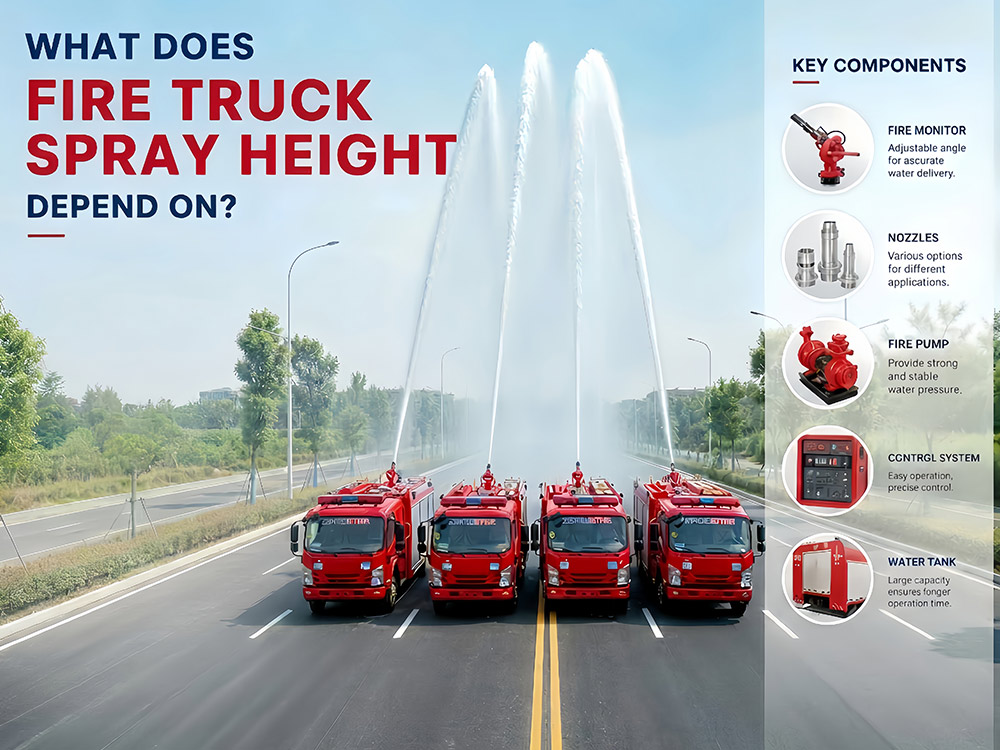
Il sistema di pompa e spruzzo dell'autopompa antincendio è il cuore delle operazioni di spegnimento degli incendi. Funziona come il "braccio potente" dell'autopompa antincendio. Convertendo la potenza del motore in pressione (da 0,8 a 1,4 MPa), trasporta agenti estinguenti ad altezze fino a 85 metri — che si tratti di un incendio in un edificio alto in un denso centro urbano o di un incendio in un serbatoio di stoccaggio petrolchimico in una zona industriale, l'autopompa antincendio si affida a questo sistema per ottenere un'efficace soppressione degli incendi. Quali fattori influenzano l'altezza di spruzzo di un'autopompa antincendio e come collaborano pressione della pompa, portata e monitor antincendio? Questi sono gli aspetti su cui si concentrano molti clienti. Scopriamoli oggi. » I. Tre componenti chiave che determinano l'altezza di spruzzo 1. Sistema della pompa antincendio: Il cuore dell'autopompa antincendio. Pompa centrifuga azionata dalla presa di forza (PTO). Classi di pressione comuni: 0,8 MPa, 1,0 MPa, 1,2 MPa, 1,4 MPa. Portate da 2.000 a oltre 5.000 L/min. 2. Monitor antincendio: Il componente finale prima che l'agente estinguente lasci il veicolo. Disponibile in monitor ad acqua, monitor a schiuma e monitor a doppio uso. La serie PL (PL48) con portate fino a 4.000 L/min e altezza di spruzzo superiore a 70 metri. 3. Sistema di mandata: Tubazioni, manichette e ugelli che trasportano l'agente estinguente dalla pompa al monitor. Il diametro della manichetta, la lunghezza e il tipo di ugello influenzano tutti l'altezza finale dello spruzzo. » II. Fattori principali che determinano l'altezza di spruzzo 1.1. Pressione della pompa La pressione della pompa dell'autopompa antincendio è la forza generata dalla pompa antincendio per spingere l'agente estinguente attraverso le manichette e scaricarlo dagli ugelli o dai monitor. È il principale fattore che determina sia la portata sia la distanza dello spruzzo. Una pressione maggiore produce una velocità più elevata all'uscita del monitor, aumentando direttamente l'altezza di spruzzo. La relazione è regolata dalla formula H ≈ P/(ρg), dove ogni aumento di 0,1 MPa aggiunge circa 10 metri di altezza teorica — ma le perdite reali riducono questo valore. Nelle operazioni antincendio pratiche, si applicano i seguenti intervalli: Pressione della pompa Altezza di spruzzo tipica 0,8 MPa 35–45 metri 1,0 MPa 45–55 metri 1,2 MPa 55–70 metri 1,4 MPa 70–85 metri 1.2. Come funziona la pompa antincendio: La pompa è generalmente una pompa centrifuga azionata dal motore del veicolo tramite una presa di forza (PTO). Quando la girante ruota, aspira l'agente estinguente e lo spinge verso l'esterno mediante la forza centrifuga, creando una pressione che lo convoglia attraverso il sistema di mandata. Pressione nominale vs. pressione di esercizio: Termine Definizione Pressione nominale La pressione massima che la pompa può mantenere continuamente nelle condizioni di progetto Pressione di esercizio La pressione effetti...
Dettagli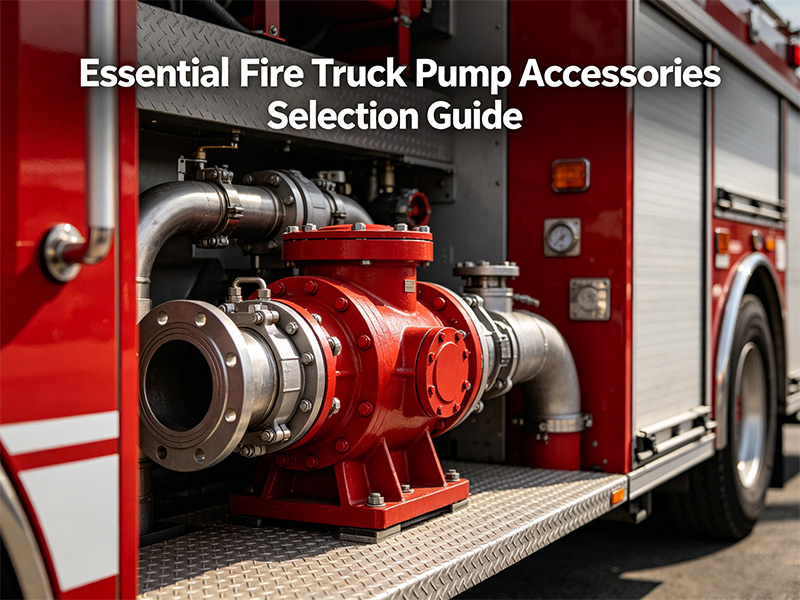
Un sistema di pompaggio per autopompa antincendio è affidabile tanto quanto i suoi componenti. Dal prelievo dell'acqua da una fonte fino allo scarico ad alta pressione, ogni accessorio svolge un ruolo fondamentale. Questa guida trattaautopompa antincendio cinque categorie chiave di accessori: adescatori, valvole a sfera, valvole a globo, proporzionatori di schiuma e sistemi di controllo idraulico. La comprensione di questi componenti aiuta i vigili del fuoco a mantenere le proprie attrezzature e a scegliere gli accessori giusti per applicazioni specifiche. I. Serie di adescatori (dispositivi di adescamento a vuoto) Gli adescatori sono essenziali per prelevare acqua da laghi, fiumi o altre fonti statiche quando non è disponibile un idrante. Rimuovono l'aria dalla pompa e dal tubo di aspirazione, consentendo alla pressione atmosferica di spingere l'acqua nella pompa. Panoramica del prodotto Prodotto Vuoto massimo Tensione Potenza Dimensione della pompa adatta Adescatore a 2 pistoni >85kPa 24V - Inferiore a 100 L/s Adescatore elettrico a 2 pistoni >85kPa 24V 2.1KW Inferiore a 100 L/s Adescatore a 4 pistoni >85kPa 24V - Superiore a 100 L/s Adescatore elettrico a 4 pistoni >85kPa 24V 2.1KW Superiore a 100 L/s Caratteristica principale: adescatori elettrici Gli adescatori elettrici offrono un vantaggio significativo: possono adescare la pompa senza che la pompa ruoti. Questo protegge la tenuta meccanica dai danni causati dal funzionamento a secco. Quando un adescatore standard richiede che la pompa ruoti, la versione elettrica funziona in modo indipendente, prolungando la durata della tenuta. II. Serie di valvole a sfera (controllo del flusso) Le valvole a sfera controllano il flusso dell'acqua attraverso tubi flessibili e uscite di mandata. Sono progettate per un funzionamento rapido di apertura/chiusura con una semplice rotazione di 90°. Valvole a sfera in acciaio inossidabile Modello Materiale Pressione nominale Filettatura Azionamento FQS65/2.5 Corpo e sfera: acciaio inossidabile 304; Guarnizione: PTFE 2.5 MPa G2-1/2" Volantino / Leva FQS80/2.5 Corpo e sfera: acciaio inossidabile 304; Guarnizione: PTFE 2.5 MPa G3" Volantino / Leva Valvole a sfera in lega di alluminio (peso ridotto) Modello Materiale Pressione nominale Filettatura Azionamento FQS65/2.5 Corpo: A356.2; Sfera: 304; Guarnizione: PTFE 2.5 MPa G2.5" Volantino / Leva FQS80/1.6 Corpo: A356.2; Sfera: 304; Guarnizione: PTFE 1.6 MPa G3" Volantino / Leva FQS65/2.5 Quadrato Corpo: A356.2; Sfera: 304; Guarnizione: PTFE 2.5 MPa - Pneumatico / Leva Ⅲ. Serie di valvole a globo (regolazione della pressione e del flusso) A differenza delle valvole a sfera, progettate per il funzionamento on/off, le valvole a globo consentono un controllo preciso della portata e della pressione. Sono ideali per situazioni in cui è necessaria una regolazione graduale. Modello Materiale Pressione nominale Filettatura Azionamento DN65/2.5 Corpo: A356.2; Stelo: H62; Guarnizione: NBR 2.5 MPa ...
Dettagli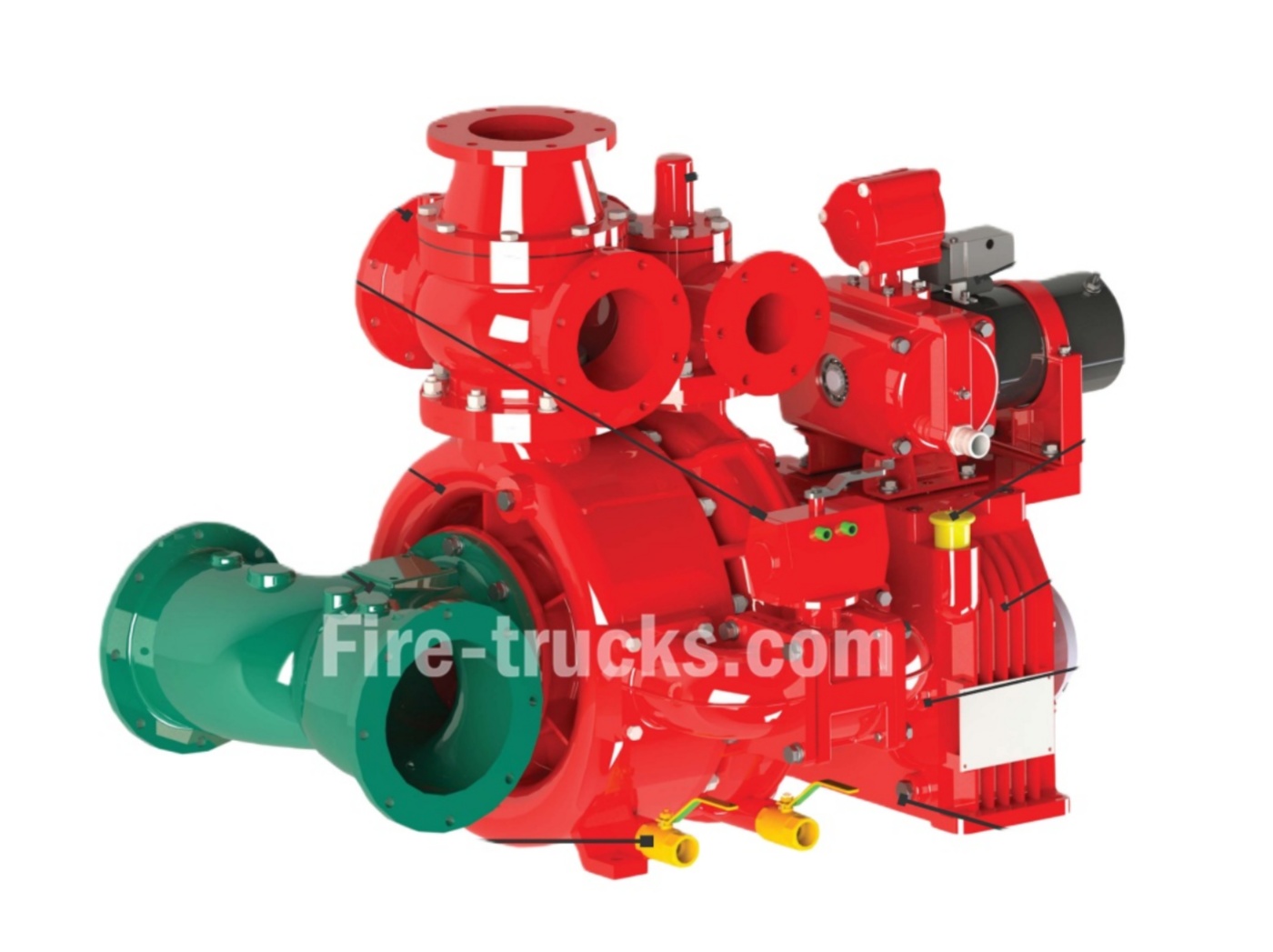
Come xiongzhen professionista produttore di pompe antincendio in Cina, Camion Powerstar possiede il proprio marchio "Xiongzhen" e la serie di prodotti "Xiongzhen", tra cui pompe antincendio a bassa pressione, pompe antincendio a media-bassa pressione e pompe antincendio montate su veicoli ad alta-bassa pressione, oltre ad attrezzature di supporto come monitor antincendio e dosatori di schiuma. Le sue pompe antincendio utilizzano nuovi materiali come la lega di alluminio e l'acciaio inossidabile e sono dotate di un dispositivo di disinnesto automatico con frizione elettromagnetica e di una valvola di ritegno, offrendo prestazioni eccellenti, semplicità d'uso e manutenzione agevole. I prodotti dell'azienda hanno superato i test di tipo del National Fire Equipment Quality Supervision and Inspection Center, la certificazione CCC e la certificazione del sistema di gestione della qualità ISO9001. Le pompe antincendio Xiongzhen includono principalmente i seguenti modelli: CB10/20-XZ, CB10/30-XZ , CB10/40-XZ, CB10/60-XZ , CB10/80-XZ, CB10/100-XZ, CB20.10/15.30-XZ, CB20.10/20.40-XZ, CB20.10/30.60-XZ, ecc. POMPA ANTINCENDIO CB10/20-XZ per autopompe POMPE ANTINCENDIO CB10/30-XZ per autopompe Pompe antincendio modello CB10/40-XZ per autopompe cinesi Pompe antincendio modello CB10-60 per autocarri antincendio Pompe antincendio di emergenza CB10/80-XZ per autopompe antincendio Pompe antincendio CB10/100-XZ per veicoli antincendio Specifiche del sistema di pompa antincendio Xiongzhen CB10/100-XZ Produttori di pompe antincendio serie CB Xiongzhen Specifiche dei gruppi pompe antincendio CB10/150 Sistema di pompa antincendio CB10/160-XZ fabbrica Xiongzhen Specifiche delle pompe antincendio di emergenza CB10/170-XZ I camion Powerstar vantano solide competenze tecniche, detengono quattro brevetti e utilizzano attrezzature di produzione all'avanguardia, come il disegno CAD e le macchine utensili CNC, per garantire elevati tassi di qualificazione dei prodotti e la soddisfazione del cliente. I suoi prodotti sono destinati principalmente agli stabilimenti di trasformazione dei camion dei pompieri e ai vigili del fuoco. Specifiche dettagliate della pompa antincendio CB20.10 20.40 Pompa antincendio CB20.10 30.60-XZ della fabbrica Xiongzhen Pompa antincendio serie CB20/15-XZ pompa antincendio di emergenza serie CB20/20-XZ Dettagli sull'installazione della pompa antincendio CB20 25 Ecco un programma di manutenzione per il tuo XIONGZHEN pompe antincendio , classificati per settimana, mese, trimestre e anno per una facile consultazione: 01, Ispezione giornaliera della pompa antincendio Powersar: Controllare la pressione di avvio-arresto e la frequenza della pompa stabilizzatrice della pressione. Controllare la potenza della batteria di avviamento della pompa antincendio del motore diesel. Controllare l'aspetto delle valvole di controllo della fonte d'acqua e dei gruppi delle valvole di allarme per verificare che non siano danneggiati. 02, Pompa antincendio Powersar Ispezione ...
Dettagli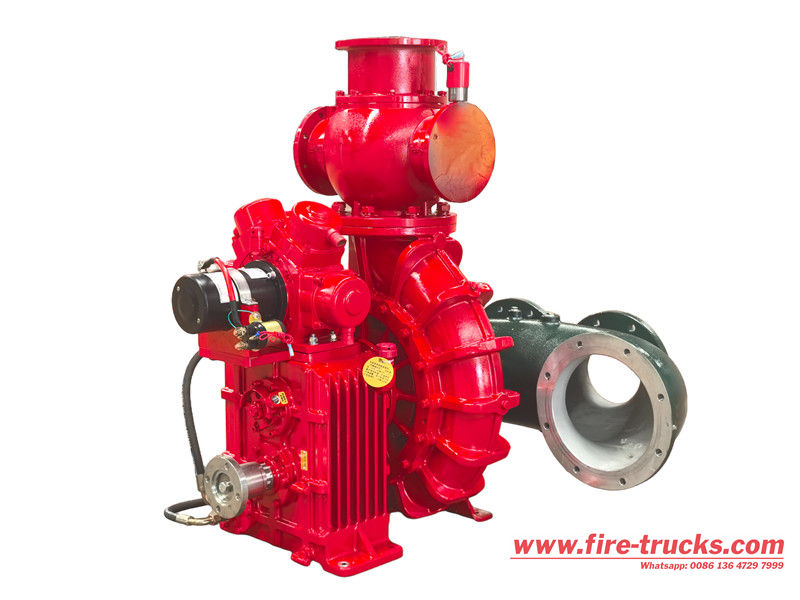
La pompa antincendio a schiuma CB10/140 è un sistema di alimentazione idrica antincendio comunemente utilizzato, montato su veicoli o fisso, con una pressione nominale di 1,0 MPa e una portata nominale di 140 l/s, che soddisfa le principali esigenze di alimentazione idrica dei sistemi antincendio. Il corpo della pompa e la girante sono realizzati con materiali di alta qualità e resistenti all'usura, che offrono resistenza alla corrosione e alle alte pressioni. È dotato di un design a doppio ingresso per una rapida commutazione della fonte d'acqua ed è azionato da un motore ad alta efficienza o da un motore diesel, con un tempo di risposta all'avvio di 30 secondi o inferiore. Grazie al suo design compatto, alla facile manutenzione e al funzionamento affidabile, Pompa antincendio a schiuma CB10/140 è un'attrezzatura essenziale per garantire un approvvigionamento idrico efficiente per le operazioni antincendio. La pompa antincendio a bassa pressione CB10/140-XZ montata su autocarro è dotata di una struttura centrifuga monostadio con corpo pompa in lega di alluminio e girante in ottone. Utilizza un sistema di adescamento dell'acqua elettrico a quattro pistoni con commutazione elettrica. La pompa schiuma CB10/20 opzionale utilizza un meccanismo di separazione pneumatico. Questo prodotto offre prestazioni eccellenti, una struttura compatta, semplicità d'uso e facile manutenzione. La pompa antincendio CB10/140-XZ è una pompa centrifuga monostadio utilizzata nei camion dei pompieri, caratterizzata da un dispositivo di adescamento a due pistoni che si innesta e si disinnesta automaticamente. È progettata per prestazioni elevate con una struttura compatta, facilità d'uso e manutenzione agevole. Le specifiche principali includono una portata di 140 l/s e una pressione di uscita di 1,0 MPa a una velocità nominale di 2600 giri/min. » . Principio di funzionamento della pompa antincendio a schiuma CB10/140 ● Assunzione di acqua e concentrato schiumogeno: L'acqua viene prelevata da una fonte di approvvigionamento e il concentrato schiumogeno viene estratto dal suo serbatoio di stoccaggio. ● Proporzionamento: Il dosatore miscela il concentrato schiumogeno con l'acqua in un rapporto predeterminato. ● Pressurizzazione: La pompa pressurizza la miscela, aumentandone la velocità e la pressione. ● Scarico: La soluzione schiumogena pressurizzata viene spinta attraverso il tubo di scarico fino all'ugello, da dove viene scaricata sull'incendio. ● Soppressione incendi: La schiuma ricopre la fonte di combustibile, separandola dall'ossigeno e spegnendo l'incendio. » . Introduzione dettagliata della pompa antincendio a schiuma CB10/140 1. Design strutturale superiore, prestazioni stabili e affidabili: ● IL Pompa antincendio CB10/140 è dotato di un design centrifugo monostadio ed è realizzato in lega di alluminio ad alta resistenza, offrendo vantaggi quali leggerezza, resistenza alla corrosione e resistenza alle alte temperature. ● La struttura interna della pompa è lavorata c...
Dettagli
Per favore, continua a leggere, resta aggiornato, iscriviti e saremo lieti di conoscere la tua opinione.

 Rete IPv6 supportata

 italiano
 English
 français
 Deutsch
 русский
 español
 português
 Nederlands
 العربية
 日本語
日本語 한국의
한국의 Türkçe
 Melayu
 ไทย
ไทย Tiếng Việt
 Indonesia
  中文
中文 қазақ
қазақ Filipino
 မြန်မာ
 српски